Thursday, June 28, 2012

Bicentenaria argentina, a new theropod dinosaur from Argentina

Bicentenaria argentina, a new theropod dinosaur from Argentina

Argentina has commemorated the 200th anniversary of its May revolution that led to the country independence on May 25, 2010. Two years later, paleontologists from that country announced the discovery of a new dinosaur and named it after the event, perhaps because the remains were unearthed on that day.  Bicentenaria argentina was unveiled to the public on Tuesday June 26, 2012 through a short press release  with pictures of the mounted skeletons of two fighting individuals (from which my illustration is based on). It is a small theropod that measured about 2.5 meters in length. The paragraph quoted from an interview with lead paleontologist Fernando Novas simply says that Bicentenaria is part of a group of dinosaurs that contain tyrannosaurs and Velociraptor and a distant ancestor to birds. This hints that Bicentenaria is a coelurosaur. The pictures of the mounted skeletons do not tell how much of it is actually known, as people tend nowadays to reconstruct entire skeletons from rather incomplete material. The actual remains consist of some 130 bones from at least 3 adults and several juveniles. The mounts look like those of a generic small size theropod, which probably means that Bicentenaria was a rather basal coelurosaurian, neither a tyrannosauroid, nor a dromaeosaur. However, the press release says the fossil is 90 million year old, thus Late Cretaceous, which seems a bit of a young age for a basal coelurosaur. I could guess the remains were found in the Portezuelo Formation of Turonian age in the Rio Negro Province, which means that Bicentenaria was a contemporary of the fabled Megaraptor, the dromaeosaurs Neuquenraptor and Unenlagia, as well as the alverezsaur Patagonykus. But let’s wait for the formal  publication of the description of this intriguing animal.

Correction: I was just told that Bicentenaria is from the Candeleros Formation of Cenomanian age, therefore a contemporary of Giganotosaurus and Buitreraptor.
 
Original artworks on Paleoexhibit are copyrighted to Nobu Tamura. Do not use without permission (Email: nobu dot tamura at yahoo dot com)

Sunday, April 8, 2012

Theropods of the British Isles Part III

Fig 1.- Juratyrant langhami
Late Jurassic Theropods of the British Isles

From the Oxfordian stage (~ 158 MYA), Metriacanthosaurus parkeri (von Huene, 1923) is another obscure tetanuran theropod, known from vertebrae, pelvic and hindlimbs elements (OUM J.12144) found near Weymouth, Dorset in the Oxford Clay Formation. Originally thought to be a megalosaurid, there is a possibility that it actually belongs to a group called sinraptorid, better known by its Chinese representatives such as Sinraptor and Yangchuanosaurus. Metriacanthosaurus probably measured about 8 meters in length.

The Kimmeridge Clay Formation has yielded a few theropod remains: one incomplete tooth from Wiltshire referred to “Megalosaurus” insignis (Eudes-Delongchamps and Lennier vide Lennier, 1870) is from a indeterminate theropod. A tibia (OUM J13568) is possibly from a megalosaur or a tetanuran. Two pedal phalanges of Fleet, Dorset are from a tetanuran.

Fig 2.- Metriacanthosaurus parkeri may have been related to Sinraptor.

Tyrannosauroids are represented by Juratyrant langhami (Benson, 2008) from the Kimmeridge Clay of Tithonian age (~149 MYA). This one is known from a single partial skeleton including a pelvis, partial leg and vertebrae (OUMNH J.3311-1—J.3311-30) found in Dorset. Juratyrant is more closely related to the British Early Cretaceous Eotyrannus than to the North American Stokesosaurus to which the animal was originally referred. Juratyrant measured about 5 meters in length.

References:

R. B. J. Benson. 2008. New information on Stokesosaurus, a tyrannosauroid (Dinosauria: Theropoda) from North America and the United Kingdom. Journal of Vertebrate Paleontology 28(3):732-750

Brusatte, S.L. and Benson, R.B.J. (In press). "The systematics of Late Jurassic tyrannosauroids (Dinosauria: Theropoda) from Europe and North America." Acta Palaeontologica Polonica, (in press).

F. v. Huene. 1923. Carnivorous Saurischia in Europe since the Triassic. Bulletin of the Geological Society of America 34:449-458.

D. Naish and D. M. Martill. 2007. Dinosaurs of Great Britain and the role of the Geological Society of London in their discovery: basal Dinosauria and Saurischia. Journal of the Geological Society, London 164:493-510.

Thursday, March 22, 2012

Theropods of the British Isles Part II

 Middle Jurassic Theropods of the British Isles

The Middle Jurassic of England was dominated by Megalosaurids, a family of large primitive tetanuran theropods, now believed to be closely related to the fish-eating Spinosaurids, early representatives of groups that will thrive during the Cretaceous, the tyrannosauroids and the maniraptorans were also present.

Fig 1.- Duriavenator hesperis

The Aalenian-Bajocian stages: Magnosaurus and Duriavenator

The Inferior Oolite formation of Aalenian-Bajocian age (~ 172 MYA) has given a few fragmentary remains of a theropod named Magnosaurus nethercombensis (von Huene, 1923) (originally ‘Megalosaurus’ nethercombensis) and described from partial dentaries, vertebrae, partial ilium, pubis and hindlimb (OUM J12143) found in Nethercomb, Dorset. Various others bits from the same formation in southern England were also referred to this rather obscure tetanuran. The fossil of M. nethercombensis has recently been reevaluated (Benson, 2010) and established to be a valid taxon. This megalosaurid is the oldest known tetanuran.

From the Upper Inferior Oolite Formation of Bajocian age (~ 170 MYA) comes Duriavenator hesperis (Waldman, 1974) (originally Megalosaurus hesperis), known from cranial bones (BMNH R332) found near Sherbourne in Dorset. This is another megalosaurid.

Fig 2.- Megalosaurus bucklandii

The Bathonian stage: Megalosaurus  and Proceratosaurus

The Bathonian age  (~166 MYA) of the British Isles is represented by a handful of theropods. The most famous of them is Megalosaurus, a name coined by William Buckland in 1824 to describe various remains including a lower jaw, vertebrae and partial hindlimbs uncovered at the Stonesfield quarry (Taynton Limestone Formation) that he thought belonged to a giant lizard-like creature. As many of the names from the early days of paleontology, Megalosaurus became a formidable wastebasket taxon, given to an assortment of miscellaneous theropod bones found around the world. Nowadays, only one species, Megalosaurus bucklandii Mantell, 1827 is considered valid and corresponds to the original material described by Buckland. Megalosaurus was a large 9 meter long theropod that was probably the top land predator of its time.

Cruxicheiros newmanorum Benson & Bradley, 2010 from the Chipping Norton Limestone Formation of lower Bathonian age, is based on scant materials, including a partial right femur (WARMS G15770) and other bits found on the same location near Little Crompton, Warwickshire. This one was a basal tetanuran of some sort. A single damaged vertebra found in the same formation but now lost, was named Streptospondylus cuvieri Owen, 1842.

Iliosuchus incognitus von Huene, 1932 from the Taynton Limestone Formation (Bathonian) of Stonesfield, Oxfordshire is known from three small ilia (BMNH R83, OUM J29780 and OUM J28971) found alongside remains of Megalosaurus. It is unclear what it was, either a small megalosaurid or the earliest known tyrannosauroid as some have suggested. A fragmentary small tibia found in the same formation was referred to Iliosuchus as well.

Fig 3.- Proceratosaurus bradleyi

Proceratosaurus bradleyi (Woodward, 1910) from the Great Oolite Group (White Limestone Formation) of Minchinhampon, Gloucestershire (Bathonian) is known from a partial skull exhibiting a nasal horn (which was possibly part of a larger crest), thus the name. This is an early tyrannosauroid, a member of this group of coelurosaurs, which will culminate into the North American Tyrannosaurus rex at the end of the Cretaceous period. Proceratosaurus perhaps measured about 3 meters in length.

From the Forest Marble Formation of Bathonian age, famous for its fossils of the sauropod Cetiosaurus, some troodont-like and dromaeosaur-like teeth have been unearthed, making it the earliest occurrence of this group in the fossil record (Evans & Milner, 1994).

The Callovian stage: Eustreptospondylus

Later in the Middle Jurassic (Callovian stage, ~163 MYA), lived another Megalosaurid named Eustreptospondylus oxoniensis Walker, 1964. This one is known from a partial skull (OUM J13558) and a partial skeleton from a juvenile individual found in Wolvercote, Oxfordshire, at the bottom of the Oxford Clay Formation. This rather obscure species was popularized in one episode of the BBC Series “walking with dinosaurs”. It probably measured something like 5 m in length.

References:

R. B. J. Benson. 2008. A redescription of 'Megalosaurus' hesperis (Dinosauria, Theropoda) from the Inferior Oolite (Bajocian, Middle Jurassic) of Dorset, United Kingdom. Zootaxa 1931:57-67

R. B. J. Benson, 2010, The osteology of Magnosaurus nethercombensis (Dinosauria, Theropoda) from the Bajocian (Middle Jurassic) of the United Kingdom and a re examination of the oldest records of tetanurans, Journal of Systematic Palaeontology, 8(1): 131-146.

S. E. Evans and A. R. Milner. 1994. Middle Jurassic microvertebrate assemblages from the British Isles. In the Shadow of the Dinosaurs: Early Mesozoic Tetrapods, N. C. Fraser and H.-D. Sues (eds.), Cambridge University Press 303-321

F. von Huene, F. 1923. Carnivorous Saurischia in Europe since the Triassic. Bulletin of the Geological Society of America 34:449-458.

D. Naish and D. M. Martill. 2007. Dinosaurs of Great Britain and the role of the Geological Society of London in their discovery: basal Dinosauria and Saurischia. Journal of the Geological Society, London 164:493-510.

R. Sadleir, P. M. Barrett, and H. P. Powell. 2008. The anatomy and systematics of Eustreptospondylus oxoniensis, a theropod dinosaur from the Middle Jurassic of Oxfordshire, England. Monograph of the Palaeontographical Society, London 160(627):1-82

M. Waldman. 1974. Megalosaurids from the Bajocian (Middle Jurassic) of Dorset. Palaeontology 17(2):325-339.

A. D. Walker. 1964. Triassic reptiles from the Elgin area: Ornithosuchus and the origin of carnosaurs. Philosophical Transactions of the Royal Society of London, Series B, Biological Sciences 248:53-134

Wednesday, February 29, 2012

Theropods of the British Isles Part I


The bipedal theropods represent the most diverse group of dinosaurs including all the meat-eating ones as well as some omnivorous and herbivorous forms. Primitive theropods include the coelophysoids (small, slender and lightly built dinosaurs that thrived worldwide during the Late Triassic, and for which the best known representative is the North American Coelophysis), the ceratosaurs (including forms such as Ceratosaurus and Carnotaurus) and the tetanurans. The last group contains the vast majority of the theropods and its members are characterized among other things by a rigid tail and the total loss of the fourth and fifth digits in their hands. Megalosaurs (i.e. Megalosaurus) are early tetanurans while Spinosaurs (i.e. Spinosaurus and co) are possibly related to them. Later tetanurans are the allosauroids (large predators such as Allosaurus and Carcharodontosaurus) and the coelurosaurians, which in turn include the tyrannosauroids (such as Tyrannosaurus), the ornithomimosaurs (the ostrich-mimic forms such as Struthiomimus and Ornithomimus) and the maniraptorans. The maniraptorans with their modified wrist and generally large hands are represented by the birds (where the hands became wings) and all their closest relatives, such as the oviraptosaurs (Oviraptor and co), the deinonychosaurs (Velociraptor and co).

Fig 1.- Small coelophysoids lived during the Late Triassic in Great Britain.

Late Triassic Theropods

During the Upper Carnian (~ 220 MYA) of Scotland lived Saltopus elginensis Huene 1910, known from a poorly preserved partial skeleton including dorsal, sacral and caudal vertebrae and fragments of fore and hind limbs (BMNH R3915) found in the Lossiemouth Sandstone Formation, near Elgin, Morayshire. The exact affinities of the animal have been debated. It was either a primitive theropod or a more ancestral dinosauriform.

Theropods were definitely present during the Late Triassic period in the British Isles as proven by the discovery of fragments in the fissure fills of southern Wales. A pelvis, femur and dorsal vertebrae (BMNH PV RU P77/1 and RUP 76/1) from Pant-y-ffynon, Wales of Norian age (~210 MYA), were possibly from a coelophysoid.

The dubious ‘Zanclodon’ cambrensis Newton, 1899 of Rhaetian age (~200 MYA) is known from the mold of a large left dentary with teeth (BGS 6532/BMNH R2912) from Glamorganshire, Wales (Lilstock Fm). This one might be another coelophysoid.


Fig 2.- Larger coelophysoid such as Sarcosaurus roamed the Early Jurassic of England.

Early Jurassic Theropods

In the early Jurassic, coelophysoids are represented by the shadowy Sarcosaurus. The type species, Sarcosaurus woodi Andrews, 1921 is known from a partial pelvis, femur and vertebra (BMNH 4840/1) from Leicestershire (Lias Fm) of Early Sinemurian age (which probably is actually of earlier Late Rhaetian or Hettangian age, ~198-200 MYA). A second species, Sarcosaurus andrewsi Huene, 1932 (= Magnosaurus woodwardi) is based on a partial right tibia (BMNH R3542), originally reported by Woodward in 1908 from Warwickshire of Hettangian age (~198 MYA). Sarcosaurus was a quite large coelophysoid with an estimated length of about 3.5 m.

From the Sinemurian (~192 MYA) Upper Broadford Beds Formation of the Isle of Skye (Scotland) came an incomplete right tibia (NMS.G.1994.10.1), interpreted as belonging to a small theropod, probably another coelophysoid (Benton et al., 1995).

A partial hindlimb from Charmouth, Dorset  (BMNH 39496) that was described by Owen (1861) alongside remains of the ornithischian Scelidosaurus harrisonii was reported from the Lower Lias (Hettangian-Sinemurian). This one was found to be comparable to a megalosaur and would therefore be an early member of this group of large theropods that will dominate the Middle Jurassic period.

Finally, a tooth (BMNH 41352) from the Lias group of Lyme Regis, named ‘Megalosaurus’ lydekkeri von Huene, 1926 (= Magnosaurus lydekkeri), is from an indeterminate theropod.


Original artworks on Paleoexhibit are copyrighted to Nobu Tamura. Do not use without permission (Email: nobu dot tamura at yahoo dot com)


References:

C. W. Andrews. 1921. On some remains of a theropodous dinosaur from the Lower Lias of Barrow-on-Soar. Annals and Magazine of Natural History, series 9 8:570-576

M.J. Benton, D.M. Martill & M.A. Taylor, 1995. The first Lower Jurassic dinosaur from Scotland: limb bone of a ceratosaur theropod from Skye. Scottish Journal of Geology, 31, 177–182.

F. v. Huene. 1910. Ein primitiver Dinosaurier aus der mittleren Trias von Elgin [A primitive dinosaur from the Middle Trias of Elgin]. Geologie und Paläontologie Abhandlungen (n.s.) 8(6):317-322.

D. Naish and D. M. Martill. 2007. Dinosaurs of Great Britain and the role of the Geological Society of London in their discovery: basal Dinosauria and Saurischia. Journal of the Geological Society, London 164:493-510.

O. W. M. Rauhut and A. Hungerbühler. 2000. A review of European Triassic theropods. GAIA 15:75-88.

Saturday, February 18, 2012

Sauropods of the British Isles Part III

Fig 1.- Rebbachisaurids were present on the Isle of Wight during the Early Cretaceous.

Sauropods from the Early Cretaceous (part II)

The Wessex Formation of the Isle of Wight

The Wessex formation on the Isle of Wight of Barremian age (~ 127 MYA) has a number of sauropod remains, all very fragmentary but enough to point to a high degree of diversity for this group in the British Isles during the Early Cretaceous.

The presence of Diplodocids is scarce if ever they were present at all. A chevron has been described by Alan Charig (1980) as belonging to a diplodocid, but the identification has since then been disputed.  The presence of Rebbachisaurids, on the other hand, is well attested and is represented by isolated bones, including a characteristic scapula [= shoulder blade]  (MIWG 6544), tail vertebra (MIWG 5384) and possibly teeth.  From these scant remains, it appears that the unnamed British representative of this group is most closely related to the Spanish Demandasaurus and the African Nigersaurus (see my previous post about it).

Brachiosaurids were also certainly there and remains are represented by  ‘Pleurocoelus’ valdensis Lydekker, 1889, based on teeth, dorsal and caudal vertebra found near Cuckfield, East Sussex, Hastings beds and on the Isle of Wight. Usually considered to be dubious, Pleurocoelus valdensis is, according to Ruiz-Omeñaca & Canudo (2005), a perfectly valid taxon that was also present in the Iberian Peninsula. Other possible brachiosaurid remains include  ‘Ornithopsis’ eucamerotus Hulke, 1882, based on a set of pelvis bones (BMNH R97), an unnamed taxon evidenced by a single large cervical vertebra (MIWG 7306) that might have belonged to the largest dinosaur of Europe (Naish et al., 2004), and Eucamerotus foxi Blows, 1995, described from a neural arch (BMNH R2522), two dorsals (BMNH R89-90) and another dorsal from a juvenile specimen (BMNH R2524). Oplosaurus armatus Gervais, 1852, is based on a large tooth (BMNH R964) that may belong to a brachiosaurid, but more recent analysis indicated it is more probably from a camarasaurid (Canudo et al., 2002). Chondrosteosaurus gigas Owen, 1876 is known from two neck vertebrae (BMNH 46869 & BMNH 46870) and is probably a basal titanosauriform, although we cannot say if it is a camarasaurid or a brachiosaurid.

Fig 2.- The specialized Titanosaurs were the dominant group of sauropods at the end of the Early Cretaceous.

The most evolved group of sauropods, the titanosaurs, is represented by Iuticosaurus valdensis LeLoeuff et al., 1993, known from 2 tail vertebrae (BMNH R146a & BMNH 151).

Finally, two dubious taxa are indeterminate sauropods: the Isle of Wight ‘Ornithopsis’ hulkei dorsal vertebra (BMNH R28632) was renamed Bothriospondylus elongatus by Owen in 1875 and ‘Ornithopsis’ eucamerotus by Hulke in 1882. Chondrosteosaurus magnus Owen, 1876 is based on a single partial vertebra (BMNH R98).

The Lower and Upper Greensand

The Lower Greensand Group of Aptian age (~120 MYA) delivered a pelvis and associated sacrum (BMNH R12713) from Luccombe Chine, Isle of Wight of a titanosauriform of some sort (Stroh, 1949, Blows, 1995). Also from the Lower Greensand came Dinodocus mackesoni Owen, 1884, based on a humerus (BMNH 14695) from Hythe, Kent. Possibly another indeterminate titanosauriform.

The Upper Greensand formation (Albian-Cenomanian age, ~112 MYA) in southeastern England bears a few sauropod remains, which are the youngest in the British Isles and all belong to titanosaurs. “Titanosaurus” lydekkeri Huene, 1929 (= Iuticosaurus lydekkeri), based on a vertebra (BMNH 32390) found on the Isle of Wight, was synonymized with Macrurosaurus semnus by McIntosh, 1990, but generally considered a nomen dubium.  Macrurosaurus semnus Seeley, 1876 is based on a set of 25 caudal vertebrae (SM B55630) and 15 more various bits found in Cambridgeshire and of Cenomanian age, and is an indeterminate titanosaur.

This concludes our tour of the sauropods of the British Isles.


Original artworks on Paleoexhibit are copyrighted to Nobu Tamura. Do not use without permission (Email: nobu dot tamura at yahoo dot com)


References:


W. T. Blows. 1995. The Early Cretaceous brachiosaurid dinosaurs Ornithopsis and Eucamerotus from the Isle of Wight, England. Palaeontology 38(1):187-197


W. T. Blows. 1998. A review of Lower and Middle Cretaceous dinosaurs of England. In S. G. Lucas, J. I. Kirkland, and J. W. Estep (eds.), Lower and Middle Cretaceous Terrestrial Ecosystems, New Mexico Museum of Natural History and Science Bulletin 14:29-38


J. Le Loeuff, E. Buffetaut, M. Martin, V. Martin, and H. Tong. 1993. Découverte d'Hadrosauridae (Dinosauria, Ornithischia) dans le Maastrichtian des Corbières (Aude, France) [Discovery of Hadrosauridae (Dinosauria, Ornithischia) in the Maastrichtian of Corbières (Aude, France)]. Comptes Rendus de l'Academie des Sciences, Paris, Série II 316:1023-1029


R. Lydekker. 1889. Note on some points in the nomenclature of fossil reptiles and amphibians, with preliminary notices of two new species. Geological Magazine, decade 3 6:325-326


R. Lydekker. 1893. On a sauropodous dinosaurian vertebra from the Wealden of Hastings. Quarterly Journal of the Geological Society of London 49:276-280


J. S. McIntosh. 1990. Sauropoda. In D. B. Weishampel, H. Osmólska, and P. Dodson (eds.), The Dinosauria. University of California Press, Berkeley 345-401


A. G. Melville. 1849. Notes on the vertebral column of the Iguanodon. Philosophical Transactions of the Royal Society of London 139:285-300.


D. Naish, D.M. Martill, D. Cooper & K.A. Stevens, 2004. Europe’s largest dinosaur? A giant brachiosaurid cervical vertebra from the Wessex Formation (Early Cretaceous) of southern England. Cretaceous Research, 25, 787–795.


D. Naish and D. M. Martill. 2007. Dinosaurs of Great Britain and the role of the Geological Society of London in their discovery: basal Dinosauria and Saurischia. Journal of the Geological Society, London 164:493-510


R. Owen. 1876. Monograph on the fossil Reptilia of the Wealden and Purbeck formations. Supplement no. VII. Crocodilia (Poikilopleuron) and Dinosauria? (Chondrosteosaurus). [Wealden.]. The Palaeontographical Society, London 1876:1-7


J. I. Ruiz-Omeñaca and J. I. Canudo. 2005. "Pleurocoelus" valdensis Lydekker 1889 (Saurischia, Sauropoda) en el Cretácico Inferior (Barremiense) de la Península Ibérica ["Pleurocoelus" valdensis Lydekker 1889 (Saurischia, Sauropoda) in the Lower Cretaceous (Barremian) of the Iberian Peninsula]. Geogaceta 38:43-45


H. G. Seeley. 1870. On Ornithopsis, a gigantic animal of the pterodactyle kind from the Wealden. Annals and Magazine of Natural History, series 4 5:279-283.


H. G. Seeley. 1876. On Macrurosaurus semnus (Seeley), a long tailed animal with procoelous vertebrae from the Cambridge Upper Greensand, preserved in the Woodwardian Museum of the University of Cambridge. Quarterly Journal of the Geological Society of London 32:440-444


M. P. Taylor and D. Naish. 2007. An unusual new neosauropod dinosaur from the Lower Cretaceous Hastings Beds Group of East Sussex, England. Palaeontology 50(6):1547-1564.

Thursday, February 9, 2012

Sauropods of the British Isles Part II

Fig 1.- A hypothetical reconstruction of Pelorosaurus conybeari.

Sauropods from the Early Cretaceous (I)

The Hastings Beds

The Hastings Beds in East Sussex, of Berriasian-Valanginian age (~140 MYA), bore a number of fragmentary sauropod remains. A set of tail vertebrae and chevrons (BMNH R2544–2555) found near Cuckfield, East Sussex, were originally described alongside some iguanodont remains by Richard Owen as Cetiosaurus brevis (Owen, 1842). Alexander Melville, noting Owen’s mistake, renamed the sauropod vertebrae Cetiosaurus conybeari (Melville, 1849). A year later, Gideon Mantell realizing that they belong to a animal quite distinct from Cetiosaurus, changed the name into Pelorosaurus conybeari (Mantell, 1850), and added to the description, a humerus (BMNH 28626) found a few meters away from the original vertebrae material. This succession of attribution changes resulted in a taxonomical nightmare for the later generation scientists. Technically, the name C. brevis has indeed seniority over Pelorosaurus conybeari and should be considered to be the valid name. However, with the invalidation of C. medius (see Part I), C. brevis would also be the type species of the genus Cetiosaurus, making its use for the Middle Jurassic C. oxoniensis, which turned out to be a very different animal quite problematic (As far as I know, the petition to ICZN to make C. oxoniensis the type species of Cetiosaurus is still pending) . As for the general aspect of what Pelorosaurus may have looked like, all that can be said from the scant remains is that it was a brachiosaurid and would probably resemble to a smaller version of the North American Late Jurassic Brachiosaurus, with a possible size of some 15 meters in length.

Not much can be said about the three other named sauropods of the Hastings Beds. ‘Pelorosaurus’ becklesi Mantell, 1852 (= Morosaurus becklesii Marsh, 1889) based on a humerus (BMNH R1868), ulna, radius and skin impressions, probably belong to a different animal than Pelorosaurus conybeari. It may also be a brachiosaurid unless it is a more advanced titanosaur. ‘Ornithopsis’ hulkei Seeley, 1870 is based on two dorsal vertebrae, one from East Sussex (BMNH R2239), the other from the Isle of Wight Wessex Formation (BMNH R28632), and originally thought to belong to a pterosaur (thus the genus name which means “bird likeness”). Owen (1876), however, split the two findings, naming the East Sussex vertebrae Bothriospondylus magnus, then Chondrosteosaurus magnus. The remains have no distinct characteristics apart the fact that they belong to a sauropod of some sort so the name should be considered dubious.  Xenoposeidon proneneukos Taylor & Naish, 2007 is based on a single partial back vertebra (BMNH R2095). Xenoposeidon’s vertebra is so unique that its affinities within the Sauropods are quite uncertain.


Next will be the sauropods from the Wessex Formation.
 
 
Original artworks on Paleoexhibit are copyrighted to Nobu Tamura. Do not use without permission (Email: nobu dot tamura at yahoo dot com)

References:

G. A. Mantell. 1850. On the Pelorosaurus; an undescribed gigantic terrestrial reptile, whose remains are associated with those of Iguanodon and other saurians in the strata of the Tilgate Forest, in Sussex. Philosophical Transactions of the Royal Society of London 140(16):379-390.

A. G. Melville. 1849. Notes on the vertebral column of the Iguanodon. Philosophical Transactions of the Royal Society of London 139:285-300.

D. Naish and D. M. Martill. 2007. Dinosaurs of Great Britain and the role of the Geological Society of London in their discovery: basal Dinosauria and Saurischia. Journal of the Geological Society, London 164:493-510.

R. Owen. 1876. Monograph on the fossil Reptilia of the Wealden and Purbeck formations. Supplement no. VII. Crocodilia (Poikilopleuron) and Dinosauria? (Chondrosteosaurus). [Wealden.]. The Palaeontographical Society, London 1876:1-7.

H. G. Seeley. 1870. On Ornithopsis, a gigantic animal of the pterodactyle kind from the Wealden. Annals and Magazine of Natural History, series 4 5:279-283.

M. P. Taylor and D. Naish. 2007. An unusual new neosauropod dinosaur from the Lower Cretaceous Hastings Beds Group of East Sussex, England. Palaeontology 50(6):1547-1564.


Sunday, January 29, 2012

Sauropods of the British Isles I

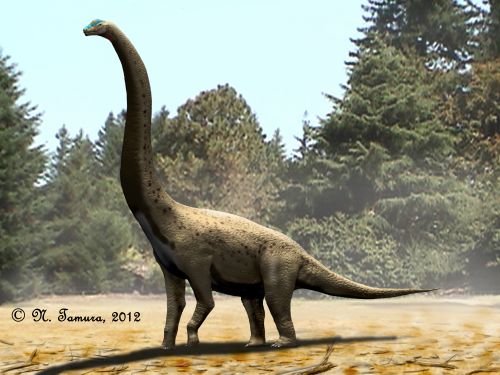
 Fig 1.- Reconstruction of Cetiosaurus oxoniensis.


Sauropods, the long-necked, long-tailed giant herbivorous dinosaurs, are better known in popular imagination by their North American representatives, Diplodocus and Brachiosaurus. Sauropods are divided into a number of families and groups that can be distinguished from details of their skeletal anatomy and teeth. Among the most primitive families, the Melanosaurids were only recently (Yates, 2007) recognized as early sauropods instead of being placed within more basal sauropodomorphs. Cetiosaurids are an ill-defined group of primitive sauropods built around the British Cetiosaurus and perhaps including other members such as the Chinese club-tailed Shunosaurus. The Turiasaurs form a recently erected clad (Royo-Torres et al., 2006) of gigantic sauropods so far restricted to southernwestern Europe. The Diplodocoids regroup three distinct families, the highly specialized rebbachisaurids, the relatively short-necked, tall-spined dicraeosaurids and the long and slender diplodocids. The Macronarians are characterized by their erect neck posture and comparatively large nasal opening (nostrils) on their head. They are subdivided into the camarasaurids (primitive macronarians), brachiosaurids and titanosaurs, the last two families including the largest and heaviest creatures that ever walked the earth.

Numerous remains of sauropods were found in the British Isles, but the vast majority of the named genera and species are based on very scant material with no unique characteristics making them nomina dubia (dubious names). However, they can generally be diagnosed at higher group levels, showing that the British Isles were once home to a diverse fauna of sauropods that include the earliest members of such groups as the Diplodocoidea and Rebbachisauridae. Let’s meet them in stratigraphical chronological order (please note that the list of fossils mentioned is in no way exhaustive)...

We already met in a previous post, Camelotia borealis from the Westbury Formation of Late Triassic Rhaetian age, which was possibly an early sauropod, unless it is a large representative of something more basal.


Sauropods from the Middle Jurassic

The first definite British sauropod remain comes from the Middle Jurassic Aalenian stage (~175 MYA). It consists of a partial left pubis and ischium (BMNH R9472) of the Northampton Sands Formation, from Harleston, Northamptonshire (Reid, 1984). This unnamed taxon was possibly a brachiosaurid or a titanosaur making it either way the earliest recorded macronarian in the world.

Fig 2.- Britain has some remains belonging to the earliest known macronarian.

Next come large collection of bones from the Forest Marble Formation of Bathonian age (~165 MYA).  The most famous fossil of this formation is the primitive sauropod Cetiosaurus (“whale lizard”). Cetiosaurus is one of the earliest dinosaurs to receive a name and, as it happened to many genera described in the early days of paleontology, it became a so-called wastebasket taxon, with up to 13 species described in the British Isles alone, ranging temporally from the Middle Jurassic to the Early Cretaceous. In a general revision of the genus, Upchurch and Martin (2003) finally recognized the only Cetiosaurus oxoniensis Phillips, 1871 from the Forest Marble as a valid species.  Cetiosaurus is known from various postcranial elements coming from different places in Oxfordshire (OUM J13605-13613, 13615-13616, 13619-13688, 13899), Northamptonshire and Gloucestershire. A partial skeleton from the slightly older Bajocian (~ 170 MYA) Rutland Formation of Rutland (LCM G468.1968) is also being assigned to C. oxoniensis, as well as a partial braincase (OUM J13596) and a tooth (OUM J13597) found at the same location than the Oxfordshire Blechington specimen. This large, perhaps 20 meters long sauropod exhibits a number of primitive features in the structure of their vertebrae.  Due to the fragmentary nature of the remains, many aspects of this animal, such as the skull, are almost totally unknown, despite it being the best-known sauropod of Great Britain.

Cetiosaurus medius Owen, 1842 known from 11 caudal centra (OUM J13693–13703) and other various bits found in Oxfordshire, Gloucestershire, Buckinghamshire, is non-diagnostic. Since C. medius is generally considered as the type species of Cetiosaurus, its invalidation would render the naming of C. oxoniensis problematic. A petition has therefore been filed to ICZN to make C. oxoniensis the new type species for the genus. Cardiodon rugulosus described by Owen in 1844, out of a single, now lost, tooth unearthed near Bradford-on-Avon, Wiltshire, may be the same animal than Cetiosaurus, but it was also been proposed to be a Turiasaur.

Two other distinct taxa are known from the Forest Marble Formation: one is ‘Cetiosaurus’ glymptonensis  Phillips, 1871 (= Cetiosauriscus glymptonensis (Phillips, 1871) McIntosh, 1990) described from a series of 9 caudal vertebrae (OUM J13750-13758) found in Glympton, Oxfordshire. It was possibly a diplodocoid, making it the earliest known member of this group in the world. However, due to the lack of unique characters, C. glymptonensis is generally considered to be a nomen dubium (Barrett et al., 2003). The as dubious Bothriospondylus robustus  Owen, 1875 = Marmarospondylus robustus) from Bradford-on-Avon, Wiltshire, is known from a single dorsal vertebra (BMNH R22428) and might be a macronarian.

Another possible macronarian has been described from the similar age Kilmaluag Formation (late Bathonian) of Strathaird, Isle of Skye, Western Scotland: it is a tooth (NMS G 2004.31.1), one of the very rare dinosaurian remains found in Scotland. This fossil is distinctly different from both Cetiosaurus and Cardiodon (Barrett, 2006).

From the Lower Callovian age (~163 MYA) Kellaways formation, comes ‘Ornithopsis’ leedsi Hulke, 1887, known from vertebrae, ribs and pelvic fragments (BMNH R1984-1988), found near Peterborough, Cambridgeshire. This was probably a Brachiosaurid. The name Ornithopsis originally refers to the undeterminate O. hulkei from the Early Cretaceous (see part II), which would mean that O. leedsi probably requires a new generic name.

Fig 3.- other remains from britain are from the earliest known diplodocoid.

In the overlying Oxford Clay Formation (Middle Callovian – Early Oxfordian age, ~161 MYA), other materials from Peterborough, including a series of vertebrae (BMNH R.3078) were confusingly also referred to ‘Ornithopsis’ leedsi by Woodward in 1905. But Charig concluded in 1980 that the bones belong to a quite different animal, a diplodocid, and give them the name ‘Cetiosauriscus’ stewarti.


Sauropods from the Late Jurassic

From the Kimmeridge Clay Formation of Kimmeridgian age (~153 MYA), comes Duriatitan humerocristatus (Lydekker, 1888) (Initially named 'Cetiosaurus' humerocristatus) based on a gracile left humerous (BMNH R44635) from Weymouth, Dorset (Hulke, 1874). It was determined to belong to a Titanosauriform (Barrett et al., 2010). The dubious ‘Ornithopsis’ manseli  (Lydekker, 1888) (= ‘Ischysaurus’ manseli ), based on a partial humerus ((BMNH 41626), also from Dorset, may belong to the same animal. The same can be said of Bothriospondylus suffosus Owen, 1875 from Wiltshire, known from dorsal and sacral vertebrae (BMNH R44592-5: 4).

Some non-diagnostic vertebrae, limb elements and dermal scutes found near Stretham, Cambridgeshire (BMNH 32498-99) were described as Gigantosaurus megalonyx Seeley, 1869 and belong to a sauropod of some sort. Also from the Kimmeridgian, ‘Cetiosaurus’ longus Owen, 1842 based on a single dorsal and caudal centra (OUM J13617) from the Portland Stone Formation at Garsington, Oxfordshire, is an indeterminate sauropod.


Original artworks on Paleoexhibit are copyrighted to Nobu Tamura. Do not use without permission (Email: nobu dot tamura at yahoo dot com)

References:

P. M. Barrett. 2006. A sauropod dinosaur tooth from the Middle Jurassic of Skye, Scotland. Transactions of the Royal Society of Edinburgh: Earth Sciences 97:25-29

P. M. Barrett, R. B. J. Benson, and P. Upchurch. 2010. Dinosaurs of Dorset: Part II, the sauropod dinosaurs (Saurischia, Sauropoda) with additional comments of the theropods. Proceedings of the Dorset Natural History and Archaeological Society 131:113-126

A. J. Charig. 1980. A diplodocid sauropod from the Lower Cretaceous of England. In L. L. Jacobs (ed.), Aspects of Vertebrate History: Essays in Honor of Edwin Harris Colbert. Museum of Northern Arizona Press, Flagstaff 231-244

J. W. Hulke. 1874. Note on a very large saurian limb-bone adapted for progression upon land, from the Kimmeridge Clay of Weymouth, Dorset. Quarterly Journal of the Geological Society of London 30:16-17

D. Naish and D. M. Martill. 2007. Dinosaurs of Great Britain and the role of the Geological Society of London in their discovery: basal Dinosauria and Saurischia. Journal of the Geological Society, London 164:493-510

R. Owen. 1841. Description of a portion of the skeleton of the Cetiosaurus, a gigantic extinct saurian reptile occurring in the Oolitic formations of different portions of England. Proceedings of the Geological Society of London 3, part 2(80):457-462

R. Owen. 1875. Monographs on the fossil Reptilia of the Mesozoic formations. Part II. (Genera Bothriospondylus, Cetiosaurus, Omosaurus). The Palaeontographical Society, London 1875:15-93

M. D. Jones. 1970. Cetiosaurus oxoniensis, Phillips J. A middle Jurassic sauropod from Rutland, England. Leicester Literary and Philosophical Society 64:144-150

J. Phillips. 1871. Geology of Oxford and the Valley of the Thames. Clarendon Press, Oxford 1-523.

P. M. Upchurch and J. Martin. 2003. The anatomy and taxonomy of Cetiosaurus (Saurischia, Sauropoda) from the Middle Jurassic of England. Journal of Vertebrate Paleontology 23(1):208-231.