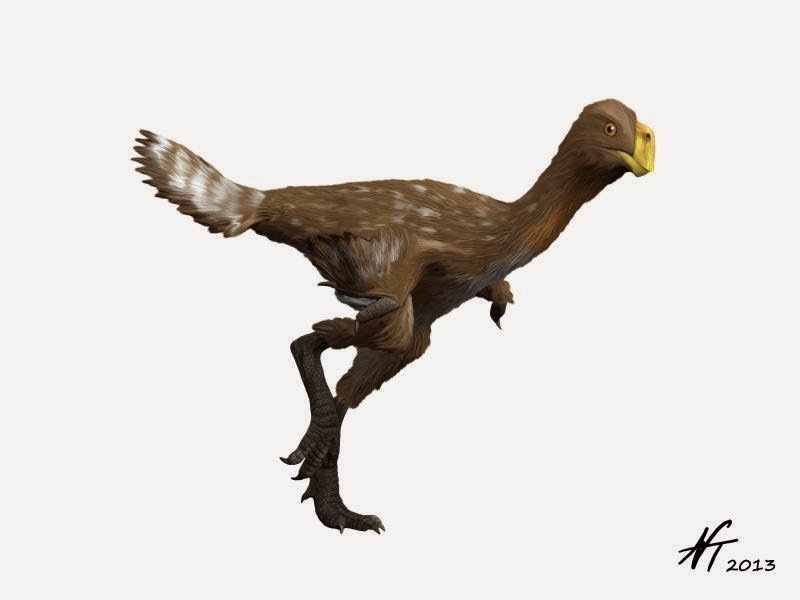
After more than 30 years, the oviraptorid "Ingenia" yanshini finally got a new name: officially, it is now Ajancingenia yanshini. This dinosaur, first described in 1981 by Rinchen Barsbold from a fragmentary skeleton, was
originally christened "Ingenia" but this generic name turns out to be
preoccupied by a nematode worm therefore necessitating a new denomination. The paper announcing the change of name was published in Zootaxa by one Jesse Easter and all sounded very well until I saw THIS! Shame on you, Mr Easter, this is not cool... not cool at all.
Ref:
R. Barsbold. 1981. Bezzubyye khishchnyye dinozavry Mongolii [Toothless carnivorous dinosaurs of Mongolia]. Sovmestnaia Sovetsko-Mongol’skaia Paleontologicheskaia Ekspeditsiia Trudy 15:28-39
J. Easter. 2013. A new name for the oviraptorid dinosaur "Ingenia" yanshini (Barsbold, 1981; preoccupied by Gerlach, 1957). Zootaxa. 3737(2), 184-190.
M. Mortimer. Theropod Database information on "Ingenia" published! ... by someone else
A. Cau. Il preoccupante caso del preoccupato Ingenia [AGGIORNAMENTO]
Original artworks on
Paleoexhibit are copyrighted to Nobu Tamura. Do not use without
permission (Email: nobu dot tamura at yahoo dot com). Check out my portfolio at spinops.blogspot.com.
Showing posts with label Cretaceous. Show all posts
Tuesday, November 19, 2013
Ajancingenia yanshini
Sunday, November 3, 2013
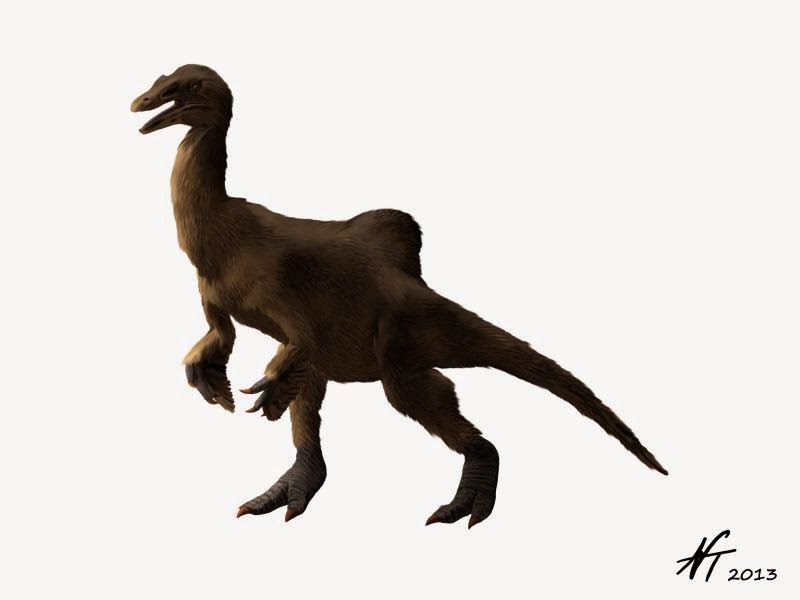
Deinocheirus the magnificent
![]() |
| A tentative recon of Deinocheirus while awaiting the official publication describing two new skeletons |
Apparently, the mysterious Deinocheirus was more freaking awesome than you could ever have imagined... as recently revealed at SVP 2013! Here is the abstract:
New Specimens of Deinocheirus mirificus from the Late Cretaceous of Mongolia
Lee, Yuong-Nam; Barsbold, Rinchen; Currie, Philip; Kobayashi, Yoshitsugu & Lee, Hang-Jae.
Abstract: The holotype of Deinocheirus mirificus was collected by the Polish-Mongolian Palaeontological Expedition at Altan Uul III in 1965. Because the holotype was known mainly on the basis of giant forelimbs with scapulocoracoids, Deinocheirus has remained one of the most mysterious dinosaurs. Two new specimens of Deinocheirus were discovered in the Nemegt Formation of Altan Uul IV in 2006 and Bugin Tsav in 2009 by members of the Korea-Mongolia International Dinosaur Expedition (KID). Except for the skull, middle dorsal and most of the distal caudal vertebrae, the right forelimb, left manus, and both pedes, the remaining parts of the skeleton (Mongolian Paleontological Center [MPC]-D 100/127) including a left forelimb clearly identifiable as Deinocheirus were collected. The humerus (993 mm in length) is longer than the 938 mm humerus of the holotype. The Altan Uul IV specimen (MPC-D 100/128) is a subadult Deinocheirus (approximately 72% of MPC-D 100/127), which consists of post-cervical vertebrae, ilia,ischia, and hind limbs. Both specimens provide important paleontological evidence for exact postcranial reconstruction of Deinocheirus mirificus. Cladistic analysis indicates that Deinocheirus is a basal member of Ornithomimosauria, but many new unique skeletal features appear to be quite different from other ornithomimosaurs. These include extreme pneumaticity of tall, anterodorsally oriented distal dorsal neural spines (7~8times taller than centrum height) with basal webbing, fused sacral neural spines forming a midline plate of bone that extends dorsally up to 170% of the height of the ilium, ventrally keeled sacral centra, a well-developed iliotibialis flange, a posterodorsally projecting posterior iliac blade with a concave dorsal margin, a steeply raised anteriordorsal margin of the ilium, an anteriorly inclined brevis shelf, vertically well-separatediliac blades above the sacrum, an completely enclosed pubic obturator foramen, triangular pubic boot in distal view, vertical ridges on anterior and posterior edges of medial surface of the femoral head, and a robust femur that is longer than tibiotarsus. These features suggest that Deinocheirus (unlike other ornithomimosaurs) was not a fast running animal, but a bulky animal with a heavily built pelvis and hind limbs. However,the dorsal ribs are tall and relatively straight, suggesting that the animal was narrow-bodied. A large number of gastroliths (>1100 ranging from 8 to 87 mm) were collected from the abdominal region of MPC-D 100/127, suggesting Deinocheirus was an herbivore.
Original artworks on
Paleoexhibit are copyrighted to Nobu Tamura. Do not use without
permission (Email: nobu dot tamura at yahoo dot com). Check out my portfolio at spinops.blogspot.com.
Labels:
Cretaceous,
Deinocheirus,
dinosaur,
OrnithomimosaurA,
Theropoda
Thursday, August 15, 2013
And then there were nine...
![]() | |
| The top right species is now synonymous with the top left one. |
Up to 15 species of Psittacosaurus have been described in the scientific litterature, but a few are dubious and others have been shown to be synonymous. With the latest 3D geometric morphometric study of the skulls of the three species of Psittacosaurids from the Lujiatun beds of the Yixian Formation of China, this number is now down to nine: Hongshanosaurus houi and Psittacosaurus major are now taxonomically dead...
![]() |
| Psittacosaurus lujiatunensis |
Here is the paper and abstract:
Hedrick BP, Dodson P (2013) Lujiatun Psittacosaurids: Understanding Individual and Taphonomic Variation Using 3D Geometric Morphometrics. PLoS ONE 8(8): e69265.
Abstract:
Psittacosaurus is one of the most abundant and speciose genera in the Dinosauria, with fifteen named species. The genus is geographically and temporally widespread with large sample sizes of several of the nominal species allowing detailed analysis of intra- and interspecific variation. We present a reanalysis of three separate, coeval species within the Psittacosauridae; P. lujiatunensis, P. major, and Hongshanosaurus houi from the Lujiatun beds of the Yixian Formation, northeastern China, using three-dimensional geometric morphometrics on a sample set of thirty skulls in combination with a reevaluation of the proposed character states for each species. Using these complementary methods, we show that individual and taphonomic variation are the joint causes of a large range of variation among the skulls when they are plotted in a morphospace. Our results demonstrate that there is only one species of Psittacosaurus within the Lujiatun beds and that the three nominal species represent different taphomorphotypes of P. lujiatunensis. The wide range of geometric morphometric variation in a single species of Psittacosaurus implies that the range of variation found in other dinosaurian groups may also be related to taphonomic distortion rather than interspecific variation. As the morphospace is driven primarily by variation resulting from taphonomic distortion, this study demonstrates that the geometric morphometric approach can only be used with great caution to delineate interspecific variation in Psittacosaurus and likely other dinosaur groups without a complementary evaluation of character states. This study presents the first application of 3D geometric morphometrics to the dinosaurian morphospace and the first attempt to quantify taphonomic variation in dinosaur skulls.
Original artworks on Paleoexhibit are copyrighted to Nobu Tamura. Do not use without permission (Email: nobu dot tamura at yahoo dot com). Check out my portfolio at spinops.blogspot.com.
Labels:
Ceratopsian,
Cretaceous,
Psittacosaurus,
Yixian
Saturday, February 18, 2012
Sauropods of the British Isles Part III
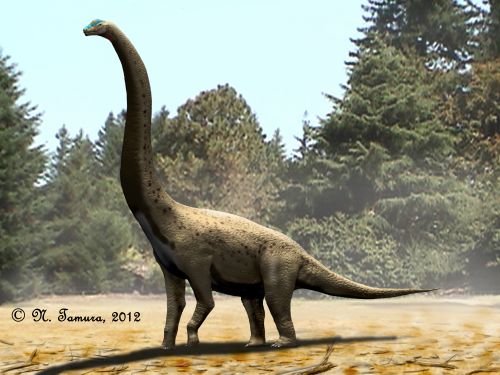
Fig 1.- Rebbachisaurids were present on the Isle of Wight during the Early Cretaceous.
Sauropods from the Early Cretaceous (part II)
The Wessex Formation of the Isle of Wight
The Wessex formation on the Isle of Wight of Barremian age (~ 127 MYA) has a number of sauropod remains, all very fragmentary but enough to point to a high degree of diversity for this group in the British Isles during the Early Cretaceous.
The presence of Diplodocids is scarce if ever they were present at all. A chevron has been described by Alan Charig (1980) as belonging to a diplodocid, but the identification has since then been disputed. The presence of Rebbachisaurids, on the other hand, is well attested and is represented by isolated bones, including a characteristic scapula [= shoulder blade] (MIWG 6544), tail vertebra (MIWG 5384) and possibly teeth. From these scant remains, it appears that the unnamed British representative of this group is most closely related to the Spanish Demandasaurus and the African Nigersaurus (see my previous post about it).
Brachiosaurids were also certainly there and remains are represented by ‘Pleurocoelus’ valdensis Lydekker, 1889, based on teeth, dorsal and caudal vertebra found near Cuckfield, East Sussex, Hastings beds and on the Isle of Wight. Usually considered to be dubious, Pleurocoelus valdensis is, according to Ruiz-Omeñaca & Canudo (2005), a perfectly valid taxon that was also present in the Iberian Peninsula. Other possible brachiosaurid remains include ‘Ornithopsis’ eucamerotus Hulke, 1882, based on a set of pelvis bones (BMNH R97), an unnamed taxon evidenced by a single large cervical vertebra (MIWG 7306) that might have belonged to the largest dinosaur of Europe (Naish et al., 2004), and Eucamerotus foxi Blows, 1995, described from a neural arch (BMNH R2522), two dorsals (BMNH R89-90) and another dorsal from a juvenile specimen (BMNH R2524). Oplosaurus armatus Gervais, 1852, is based on a large tooth (BMNH R964) that may belong to a brachiosaurid, but more recent analysis indicated it is more probably from a camarasaurid (Canudo et al., 2002). Chondrosteosaurus gigas Owen, 1876 is known from two neck vertebrae (BMNH 46869 & BMNH 46870) and is probably a basal titanosauriform, although we cannot say if it is a camarasaurid or a brachiosaurid.
The Wessex Formation of the Isle of Wight
The Wessex formation on the Isle of Wight of Barremian age (~ 127 MYA) has a number of sauropod remains, all very fragmentary but enough to point to a high degree of diversity for this group in the British Isles during the Early Cretaceous.
The presence of Diplodocids is scarce if ever they were present at all. A chevron has been described by Alan Charig (1980) as belonging to a diplodocid, but the identification has since then been disputed. The presence of Rebbachisaurids, on the other hand, is well attested and is represented by isolated bones, including a characteristic scapula [= shoulder blade] (MIWG 6544), tail vertebra (MIWG 5384) and possibly teeth. From these scant remains, it appears that the unnamed British representative of this group is most closely related to the Spanish Demandasaurus and the African Nigersaurus (see my previous post about it).
Brachiosaurids were also certainly there and remains are represented by ‘Pleurocoelus’ valdensis Lydekker, 1889, based on teeth, dorsal and caudal vertebra found near Cuckfield, East Sussex, Hastings beds and on the Isle of Wight. Usually considered to be dubious, Pleurocoelus valdensis is, according to Ruiz-Omeñaca & Canudo (2005), a perfectly valid taxon that was also present in the Iberian Peninsula. Other possible brachiosaurid remains include ‘Ornithopsis’ eucamerotus Hulke, 1882, based on a set of pelvis bones (BMNH R97), an unnamed taxon evidenced by a single large cervical vertebra (MIWG 7306) that might have belonged to the largest dinosaur of Europe (Naish et al., 2004), and Eucamerotus foxi Blows, 1995, described from a neural arch (BMNH R2522), two dorsals (BMNH R89-90) and another dorsal from a juvenile specimen (BMNH R2524). Oplosaurus armatus Gervais, 1852, is based on a large tooth (BMNH R964) that may belong to a brachiosaurid, but more recent analysis indicated it is more probably from a camarasaurid (Canudo et al., 2002). Chondrosteosaurus gigas Owen, 1876 is known from two neck vertebrae (BMNH 46869 & BMNH 46870) and is probably a basal titanosauriform, although we cannot say if it is a camarasaurid or a brachiosaurid.
Fig 2.- The specialized Titanosaurs were the dominant group of sauropods at the end of the Early Cretaceous.
The most evolved group of sauropods, the titanosaurs, is represented by Iuticosaurus valdensis LeLoeuff et al., 1993, known from 2 tail vertebrae (BMNH R146a & BMNH 151).
Finally, two dubious taxa are indeterminate sauropods: the Isle of Wight ‘Ornithopsis’ hulkei dorsal vertebra (BMNH R28632) was renamed Bothriospondylus elongatus by Owen in 1875 and ‘Ornithopsis’ eucamerotus by Hulke in 1882. Chondrosteosaurus magnus Owen, 1876 is based on a single partial vertebra (BMNH R98).
The Lower and Upper Greensand
The Lower Greensand Group of Aptian age (~120 MYA) delivered a pelvis and associated sacrum (BMNH R12713) from Luccombe Chine, Isle of Wight of a titanosauriform of some sort (Stroh, 1949, Blows, 1995). Also from the Lower Greensand came Dinodocus mackesoni Owen, 1884, based on a humerus (BMNH 14695) from Hythe, Kent. Possibly another indeterminate titanosauriform.
The Upper Greensand formation (Albian-Cenomanian age, ~112 MYA) in southeastern England bears a few sauropod remains, which are the youngest in the British Isles and all belong to titanosaurs. “Titanosaurus” lydekkeri Huene, 1929 (= Iuticosaurus lydekkeri), based on a vertebra (BMNH 32390) found on the Isle of Wight, was synonymized with Macrurosaurus semnus by McIntosh, 1990, but generally considered a nomen dubium. Macrurosaurus semnus Seeley, 1876 is based on a set of 25 caudal vertebrae (SM B55630) and 15 more various bits found in Cambridgeshire and of Cenomanian age, and is an indeterminate titanosaur.
This concludes our tour of the sauropods of the British Isles.
Original artworks on Paleoexhibit are copyrighted to Nobu Tamura. Do not use without permission (Email: nobu dot tamura at yahoo dot com)
References:
W. T. Blows. 1995. The Early Cretaceous brachiosaurid dinosaurs Ornithopsis and Eucamerotus from the Isle of Wight, England. Palaeontology 38(1):187-197
W. T. Blows. 1998. A review of Lower and Middle Cretaceous dinosaurs of England. In S. G. Lucas, J. I. Kirkland, and J. W. Estep (eds.), Lower and Middle Cretaceous Terrestrial Ecosystems, New Mexico Museum of Natural History and Science Bulletin 14:29-38
J. Le Loeuff, E. Buffetaut, M. Martin, V. Martin, and H. Tong. 1993. Découverte d'Hadrosauridae (Dinosauria, Ornithischia) dans le Maastrichtian des Corbières (Aude, France) [Discovery of Hadrosauridae (Dinosauria, Ornithischia) in the Maastrichtian of Corbières (Aude, France)]. Comptes Rendus de l'Academie des Sciences, Paris, Série II 316:1023-1029
R. Lydekker. 1889. Note on some points in the nomenclature of fossil reptiles and amphibians, with preliminary notices of two new species. Geological Magazine, decade 3 6:325-326
R. Lydekker. 1893. On a sauropodous dinosaurian vertebra from the Wealden of Hastings. Quarterly Journal of the Geological Society of London 49:276-280
J. S. McIntosh. 1990. Sauropoda. In D. B. Weishampel, H. Osmólska, and P. Dodson (eds.), The Dinosauria. University of California Press, Berkeley 345-401
A. G. Melville. 1849. Notes on the vertebral column of the Iguanodon. Philosophical Transactions of the Royal Society of London 139:285-300.
D. Naish, D.M. Martill, D. Cooper & K.A. Stevens, 2004. Europe’s largest dinosaur? A giant brachiosaurid cervical vertebra from the Wessex Formation (Early Cretaceous) of southern England. Cretaceous Research, 25, 787–795.
D. Naish and D. M. Martill. 2007. Dinosaurs of Great Britain and the role of the Geological Society of London in their discovery: basal Dinosauria and Saurischia. Journal of the Geological Society, London 164:493-510
R. Owen. 1876. Monograph on the fossil Reptilia of the Wealden and Purbeck formations. Supplement no. VII. Crocodilia (Poikilopleuron) and Dinosauria? (Chondrosteosaurus). [Wealden.]. The Palaeontographical Society, London 1876:1-7
J. I. Ruiz-Omeñaca and J. I. Canudo. 2005. "Pleurocoelus" valdensis Lydekker 1889 (Saurischia, Sauropoda) en el Cretácico Inferior (Barremiense) de la Península Ibérica ["Pleurocoelus" valdensis Lydekker 1889 (Saurischia, Sauropoda) in the Lower Cretaceous (Barremian) of the Iberian Peninsula]. Geogaceta 38:43-45
H. G. Seeley. 1870. On Ornithopsis, a gigantic animal of the pterodactyle kind from the Wealden. Annals and Magazine of Natural History, series 4 5:279-283.
H. G. Seeley. 1876. On Macrurosaurus semnus (Seeley), a long tailed animal with procoelous vertebrae from the Cambridge Upper Greensand, preserved in the Woodwardian Museum of the University of Cambridge. Quarterly Journal of the Geological Society of London 32:440-444
M. P. Taylor and D. Naish. 2007. An unusual new neosauropod dinosaur from the Lower Cretaceous Hastings Beds Group of East Sussex, England. Palaeontology 50(6):1547-1564.
Labels:
Cretaceous,
Iuticosaurus,
Pleurocoelus,
Sauropods
Thursday, February 9, 2012
Sauropods of the British Isles Part II
Sauropods from the Early Cretaceous (I)
The Hastings Beds
The Hastings Beds in East Sussex, of Berriasian-Valanginian age (~140 MYA), bore a number of fragmentary sauropod remains. A set of tail vertebrae and chevrons (BMNH R2544–2555) found near Cuckfield, East Sussex, were originally described alongside some iguanodont remains by Richard Owen as Cetiosaurus brevis (Owen, 1842). Alexander Melville, noting Owen’s mistake, renamed the sauropod vertebrae Cetiosaurus conybeari (Melville, 1849). A year later, Gideon Mantell realizing that they belong to a animal quite distinct from Cetiosaurus, changed the name into Pelorosaurus conybeari (Mantell, 1850), and added to the description, a humerus (BMNH 28626) found a few meters away from the original vertebrae material. This succession of attribution changes resulted in a taxonomical nightmare for the later generation scientists. Technically, the name C. brevis has indeed seniority over Pelorosaurus conybeari and should be considered to be the valid name. However, with the invalidation of C. medius (see Part I), C. brevis would also be the type species of the genus Cetiosaurus, making its use for the Middle Jurassic C. oxoniensis, which turned out to be a very different animal quite problematic (As far as I know, the petition to ICZN to make C. oxoniensis the type species of Cetiosaurus is still pending) . As for the general aspect of what Pelorosaurus may have looked like, all that can be said from the scant remains is that it was a brachiosaurid and would probably resemble to a smaller version of the North American Late Jurassic Brachiosaurus, with a possible size of some 15 meters in length.
Not much can be said about the three other named sauropods of the Hastings Beds. ‘Pelorosaurus’ becklesi Mantell, 1852 (= Morosaurus becklesii Marsh, 1889) based on a humerus (BMNH R1868), ulna, radius and skin impressions, probably belong to a different animal than Pelorosaurus conybeari. It may also be a brachiosaurid unless it is a more advanced titanosaur. ‘Ornithopsis’ hulkei Seeley, 1870 is based on two dorsal vertebrae, one from East Sussex (BMNH R2239), the other from the Isle of Wight Wessex Formation (BMNH R28632), and originally thought to belong to a pterosaur (thus the genus name which means “bird likeness”). Owen (1876), however, split the two findings, naming the East Sussex vertebrae Bothriospondylus magnus, then Chondrosteosaurus magnus. The remains have no distinct characteristics apart the fact that they belong to a sauropod of some sort so the name should be considered dubious. Xenoposeidon proneneukos Taylor & Naish, 2007 is based on a single partial back vertebra (BMNH R2095). Xenoposeidon’s vertebra is so unique that its affinities within the Sauropods are quite uncertain.
Next will be the sauropods from the Wessex Formation.
The Hastings Beds
The Hastings Beds in East Sussex, of Berriasian-Valanginian age (~140 MYA), bore a number of fragmentary sauropod remains. A set of tail vertebrae and chevrons (BMNH R2544–2555) found near Cuckfield, East Sussex, were originally described alongside some iguanodont remains by Richard Owen as Cetiosaurus brevis (Owen, 1842). Alexander Melville, noting Owen’s mistake, renamed the sauropod vertebrae Cetiosaurus conybeari (Melville, 1849). A year later, Gideon Mantell realizing that they belong to a animal quite distinct from Cetiosaurus, changed the name into Pelorosaurus conybeari (Mantell, 1850), and added to the description, a humerus (BMNH 28626) found a few meters away from the original vertebrae material. This succession of attribution changes resulted in a taxonomical nightmare for the later generation scientists. Technically, the name C. brevis has indeed seniority over Pelorosaurus conybeari and should be considered to be the valid name. However, with the invalidation of C. medius (see Part I), C. brevis would also be the type species of the genus Cetiosaurus, making its use for the Middle Jurassic C. oxoniensis, which turned out to be a very different animal quite problematic (As far as I know, the petition to ICZN to make C. oxoniensis the type species of Cetiosaurus is still pending) . As for the general aspect of what Pelorosaurus may have looked like, all that can be said from the scant remains is that it was a brachiosaurid and would probably resemble to a smaller version of the North American Late Jurassic Brachiosaurus, with a possible size of some 15 meters in length.
Not much can be said about the three other named sauropods of the Hastings Beds. ‘Pelorosaurus’ becklesi Mantell, 1852 (= Morosaurus becklesii Marsh, 1889) based on a humerus (BMNH R1868), ulna, radius and skin impressions, probably belong to a different animal than Pelorosaurus conybeari. It may also be a brachiosaurid unless it is a more advanced titanosaur. ‘Ornithopsis’ hulkei Seeley, 1870 is based on two dorsal vertebrae, one from East Sussex (BMNH R2239), the other from the Isle of Wight Wessex Formation (BMNH R28632), and originally thought to belong to a pterosaur (thus the genus name which means “bird likeness”). Owen (1876), however, split the two findings, naming the East Sussex vertebrae Bothriospondylus magnus, then Chondrosteosaurus magnus. The remains have no distinct characteristics apart the fact that they belong to a sauropod of some sort so the name should be considered dubious. Xenoposeidon proneneukos Taylor & Naish, 2007 is based on a single partial back vertebra (BMNH R2095). Xenoposeidon’s vertebra is so unique that its affinities within the Sauropods are quite uncertain.
Next will be the sauropods from the Wessex Formation.
Original artworks on Paleoexhibit are copyrighted to Nobu Tamura. Do not use without permission (Email: nobu dot tamura at yahoo dot com)
References:
G. A. Mantell. 1850. On the Pelorosaurus; an undescribed gigantic terrestrial reptile, whose remains are associated with those of Iguanodon and other saurians in the strata of the Tilgate Forest, in Sussex. Philosophical Transactions of the Royal Society of London 140(16):379-390.
A. G. Melville. 1849. Notes on the vertebral column of the Iguanodon. Philosophical Transactions of the Royal Society of London 139:285-300.
D. Naish and D. M. Martill. 2007. Dinosaurs of Great Britain and the role of the Geological Society of London in their discovery: basal Dinosauria and Saurischia. Journal of the Geological Society, London 164:493-510.
R. Owen. 1876. Monograph on the fossil Reptilia of the Wealden and Purbeck formations. Supplement no. VII. Crocodilia (Poikilopleuron) and Dinosauria? (Chondrosteosaurus). [Wealden.]. The Palaeontographical Society, London 1876:1-7.
H. G. Seeley. 1870. On Ornithopsis, a gigantic animal of the pterodactyle kind from the Wealden. Annals and Magazine of Natural History, series 4 5:279-283.
M. P. Taylor and D. Naish. 2007. An unusual new neosauropod dinosaur from the Lower Cretaceous Hastings Beds Group of East Sussex, England. Palaeontology 50(6):1547-1564.
References:
G. A. Mantell. 1850. On the Pelorosaurus; an undescribed gigantic terrestrial reptile, whose remains are associated with those of Iguanodon and other saurians in the strata of the Tilgate Forest, in Sussex. Philosophical Transactions of the Royal Society of London 140(16):379-390.
A. G. Melville. 1849. Notes on the vertebral column of the Iguanodon. Philosophical Transactions of the Royal Society of London 139:285-300.
D. Naish and D. M. Martill. 2007. Dinosaurs of Great Britain and the role of the Geological Society of London in their discovery: basal Dinosauria and Saurischia. Journal of the Geological Society, London 164:493-510.
R. Owen. 1876. Monograph on the fossil Reptilia of the Wealden and Purbeck formations. Supplement no. VII. Crocodilia (Poikilopleuron) and Dinosauria? (Chondrosteosaurus). [Wealden.]. The Palaeontographical Society, London 1876:1-7.
H. G. Seeley. 1870. On Ornithopsis, a gigantic animal of the pterodactyle kind from the Wealden. Annals and Magazine of Natural History, series 4 5:279-283.
M. P. Taylor and D. Naish. 2007. An unusual new neosauropod dinosaur from the Lower Cretaceous Hastings Beds Group of East Sussex, England. Palaeontology 50(6):1547-1564.
Monday, January 2, 2012
Ankylosaurs of the British Isles
Fig 1.- Hyleosaurus armatus.
The Ankylosaurs form a group of heavily armored ornithischian dinosaurs best known by its North American cretaceous representatives, Ankylosaurus and Euoplocephalus. Ankylosaurs and Stegosaurs together form the Thyreophorans characterized by a body covered with an armor consisting of scutes, spikes and plates, that are highly derived osteoderms (ossified scales commonly found in various groups of vertebrates such as the crocodilians).
The Ankylosaurs are divided into two or three families. The Nodosaurids have a narrow skull, a club-less tail and large spikes while the Ankylosaurids have a distinct bony club at the end of their tails and a wider body. In addition, some authors detach some Nodosaurids, into a third family, the more lightly built Polacanthids.
Scelidosaurus harrisonii from the Early Jurassic of Dorset, is an early thyreophoran close to the ancestral stock of both stegosaurs and ankylosaurs. There is however a large gap in the fossil record between the first definite ankylosaur in the United Kingdom and Scelidosaurus. Jurassic ankylosaur remains are so fragmentary that not much definite can be said about them.
In the Middle Jurassic (Bajocian, 170 MYA), an incomplete radius and ulna (forearm bones) from the Isle of Skye in Scotland, described by Clark in 2001, possibly belongs to an ankylosaur, unless it is a stegosaur.
A bit younger (Middle Jurassic, Callovian, 163 MYA), Sarcolestes leedsi is known from an incomplete lower jaw from the Oxford Clay Formation in Cambridgeshire. Three osteoderms recovered from the same formation have been attributed to it (Galton, 1994). It was originally thought to be a theropod (thus its name meaning “flesh robber”), before being classified as a stegosaur, then an ankylosaur of some sort.
From the Late Jurassic period (Oxfordian, 160 MYA), a right femur found in the Ampthill Clay Formation of Cambridgeshire was named Cryptosaurus eumerus and first attributed to an ornithopod, until Peter Galton placed it among the ankylosaurs (1983). A maxilla of the same age named Priodontognathus phillipsi was found in Yorkshire. This also was first attributed to an ornithopod before Galton classified it as a nodosaurid ankylosaur (1980).
Better ankylosaur material appears in the Early Cretaceous with Hylaeosaurus and Polacanthus. Hylaeosaurus armatus is one of the original three animals (the others being Iguanodon and Megalosaurus) used by Sir Richard Owen to define the then new group he called Dinosauria in 1842. This 6 meter long polacanthid nodosaur is known from the Turnbridge Wells Sand Formation (Grinstead Clay member) of Valanginian age (~138 MYA) and its remains have been discovered in West Sussex. The holotype found in the Tilgate Forest area by Gideon Mantell in 1832 consists of the anterior portion of an articulated skeleton including a small portion of the skull. A second specimen from Bolney was partially destroyed by workers before Mantell could salvage a few bits including a left scapula, a fragment of the right scapula and a left tibia. A third specimen found by Mantell in 1827 from the Tilgate Forest quarry consists of an incomplete caudal series with armor (originally named H. oweni). From Mantell’s Bolney material combined with remains found in the Isle of Wight, Nopsca erected the new genus and species Polacanthoides ponderosus in 1928. Today, the Bolney material is attributed to Hylaeosaurus armatus while the Isle of Wight material is considered to belong to Polacanthus foxii, making Polacanthoides an invalid name. Hylaeosaurus is still a quite obscure animal despite being one of the earliest described dinosaurs. It was probably closely related to Polacanthus.
Fig 2.- Polacanthus foxii.
Polacanthus foxii, which was for some times being considered to be the same animal as Hylaeosaurus, is nowadays generally thought to be distinct. Stratigraphically, it is slightly younger, appearing only in the Wessex and Vectis Formations of the Isle of Wight of Upper Barremian age (~ 125 MYA). The generic name appears first in a anonymous field note from 1865 attributing the paternity of the name to Richard Owen. The holotype collected by the reverend William Fox consists of the rear end of the animal. A second specimen described by W. T. Blows in 1979 consists of neck vertebrae and anterior armor. A third specimen is currently in private ownership. A portion of a pelvis and some dermal armor, originally named Polacanthus becklesi by Hennig in 1924 is now considered to belong to P. foxii. Many other various bits attributed to P. foxii have been found including the now lost Isle of Wight parts used to define Polacanthoides ponderosus described above and the single spine named Vectensia by Delair, 1982. Polacanthus foxii was a 4-5 meter long nodosaur, serving as the type to the polacanthid family.
Blows has erected a second species of Polacanthus, P. rudgwickensis, in 1996 out of a partial skeleton from the mainland found near Rudgwick, Sussex. This species appears to be slightly larger and more robust than P. foxii but its validity has been disputed.
Fig 3.- Anoplosaurus curtonotus.
From the mainland Upper Greensand Formation of Albian age (~110 MYA), a number of fragments were attributed to ankylosaurs and named into several genera including Anoplosaurus, Acanthopholis, Eucercosaurus, Syngonosaurus and Macrurosaurus and a plethora of species. All of them, save perhaps Anoplosaurus curtonotus are dubious in the sense that from such fragmentary remains there are no unique characters to define each of the species. Anoplosaurus curtonotus has been described from various fragments from a juvenile individual and probably belong to a nodosaurid of some sort. The second species, A. major is probably chimeric. The genus Acanthopholis was often illustrated in dinosaur books but all the 7-9 species described, including the type A. horrida, were determined to be dubious by a review by Pereda-Superbiola and Barrett (1999).
This concludes our tour of the British Isles Ornithischians. Now to the Saurischians.
Original artworks on Paleoexhibit are copyrighted to Nobu Tamura. Do not use without permission (Email: nobu dot tamura at yahoo dot com).
References:
Blows, W. T. 1982. A preliminary account of a new specimen of Polacanthus foxi (Ankylosauria, Reptilia) from the Wealden of the Isle of Wight. Proceedings of the Isle of Wight Natural History and Archaeological Society 1980 pt. 5(7):303-306.
Clark, N.D.L. 2001. A thyreophoran dinosaur from the early Bajocian (Middle Jurassic) of the Isle of Skye, Scotland. Scottish Journal of Geology, 37, 19–26.
Fox. W. 1866. On a new Wealden saurian named Polacanthus. Report of the British Association for the Advancement of Science, Birmingham 1865:56.
Fox. W.1866. Another new Wealden reptile. Geological Magazine 3:383.
Galton, P.M. 1980. Priodontognathus phillipsii (Seeley), an ankylosaurian dinosaur from the Upper Jurassic (or possibly Lower Cretaceous) of England. Neues Jahrbuch für Geologie und Paläontologie Monatshefte 1980(8):477-489.
Galton, P.M. 1983. Armored dinosaurs (Ornithischia: Ankylosauria) from the Middle and Upper Jurassic of Europe, Palaeontographica Abteilung A 182(1-3): 1-25.
Galton, P. M. 1994. Dermal scutes of Sarcolestes, an ankylosaurian dinosaur from the Middle Jurassic of England. Neues Jahrbuch für Geologie und Paläontologie Monatshefte 1994(12):726-732
Naish, D.; and Martill, D. M. 2008. Dinosaurs of Great Britain and the role of the Geological Society of London in their discovery: Ornithischia. Journal of the Geological Society, London 165 (3): 613–623.
Pereda-Suberbiola, J. 1993. Hylaeosaurus, Polacanthus, and the systematics and stratigraphy of Wealden armoured dinosaurs. Geological Magazine, 130, 767-781.
Pereda-Suberbiola, J. 1994. Polacanthus (Ornithischia, Ankylosauria), a transatlantic armoured dinosaur from the Early Cretaceous of Europe and North America. Palaeontographica Abteilung A 232(4-6):133-159.
Pereda-Suberbiola, J. & Barrett. P.M., 1999. A systematic review of ankylosaurian dinosaur remains from the Albian-Cenomanian of England, Special Papers in Palaeontology, 60: 177-208.
Labels:
Acanthopholis,
Ankylosaur,
Anoplosaurus,
Cretaceous,
Hylaeosaurus,
Jurassic,
Polacanthus,
Scelidosaurus
Friday, December 23, 2011
Kronosaurus queenslandicus
Fig. 1.- Reconstruction of Kronosaurus queenslandicus chasing a plesiosaur.
The most famous of the pliosaurs before WWD eclipsed it with an oversized Liopleurodon. This large (9-10 meters) marine reptile lived in the open oceans of Australia during the Aptian-Albian stage of the Early Cretaceous and was hunting large preys such as the long-necked plesiosaurs. It is known from at least three individuals, one being the iconic Harvard skeleton which was reconstructed with too many dorsal vertebrae making Kronosaurus a bit longer than it really was. A second species, named Kronosaurus boyacensis was found in Northern Colombia.
Original artworks on Paleoexhibit are copyrighted to Nobu Tamura. Do not use without permission (Email: nobu dot tamura at yahoo dot com)
References:
Hampe O. 1992. Ein großwüchsiger Pliosauride (Reptilia: Plesiosauria) aus der Unterkreide (oberes Aptium) von Kolumbien. Courier Forschungsinstitut Senckenberg 145: 1-32.
Longman H. A. 1924. A new gigantic marine reptile from the Queensland Cretaceous, Kronosaurus queenslandicus new genus and species. Memoirs of the Queensland Museum 8: 26–28.
The most famous of the pliosaurs before WWD eclipsed it with an oversized Liopleurodon. This large (9-10 meters) marine reptile lived in the open oceans of Australia during the Aptian-Albian stage of the Early Cretaceous and was hunting large preys such as the long-necked plesiosaurs. It is known from at least three individuals, one being the iconic Harvard skeleton which was reconstructed with too many dorsal vertebrae making Kronosaurus a bit longer than it really was. A second species, named Kronosaurus boyacensis was found in Northern Colombia.
Original artworks on Paleoexhibit are copyrighted to Nobu Tamura. Do not use without permission (Email: nobu dot tamura at yahoo dot com)
References:
Hampe O. 1992. Ein großwüchsiger Pliosauride (Reptilia: Plesiosauria) aus der Unterkreide (oberes Aptium) von Kolumbien. Courier Forschungsinstitut Senckenberg 145: 1-32.
Longman H. A. 1924. A new gigantic marine reptile from the Queensland Cretaceous, Kronosaurus queenslandicus new genus and species. Memoirs of the Queensland Museum 8: 26–28.
Friday, December 9, 2011
Spinops sternbergorum
Fig 1.- Life reconstruction of Spinops sternbergorum.
This dinosaur was “rediscovered” within the precinct of the Natural History Museum in London, almost a century after it was excavated in the Dinosaur Park Formation in Alberta, Canada. It was only very recently realized that the long forgotten skull fragments belong to a new species.
Original artworks on Paleoexhibit are copyrighted to Nobu Tamura. Do not use without permission (Email: nobu dot tamura at yahoo dot com)
Fig 2.- Detail.
Reference:
Farke, A.A., Ryan, M.J., Barrett, P.M., Tanke, D.H., Braman, D.R., Loewen, M.A., and Graham, M.R. 2011. A new centrosaurine from the Late Cretaceous of Alberta, Canada, and the evolution of parietal ornamentation in horned dinosaurs. Acta Palaeontologica Polonica 56 (4): 691–702.
Abstract: In 1916, a centrosaurine dinosaur bonebed was excavated within the Campanian−aged deposits of what is now Dinosaur Provincial Park, Alberta, Canada. Specimens from this now−lost quarry, including two parietals, a squamosal, a skull missing the frill, and an incomplete dentary, were purchased by The Natural History Museum, London. The material was recently reprepared and identified herein as a previously unknown taxon, Spinops sternbergorum gen. et sp. nov. Based upon the available locality data and paleopalynology, the quarry lies in either the upper part of the Oldman Formation or the lower part of the Dinosaur Park Formation. The facial region of the partial skull is similar to putative mature specimens of Centrosaurus spp. and Styracosaurus albertensis, with short, rounded postorbital horncores and a large, erect nasal horncore. Parietal ornamentation is consistent on both known parietals and is unique among ceratopsids. Bilateral, procurved parietal hooks occupy the P1 (medial−most) position on the dorsal surface of the parietal and are very similar to those seen in Centrosaurus apertus. Epiparietals in the P2 or possibly P3 position (lateral to P1) manifest as extremely elongate, caudally directed spikes, unlike the condition in C. apertus, S. albertensis, or any other “derived” centrosaurine. Cladistic analysis suggests that S. sternbergorum is closely related to Centrosaurus and Styracosaurus. Historically, based upon the condition in Styracosaurus and related centrosaurines, it was assumed that the medial−most elongated spikes on centrosaurine parietals correspond to the P3 epiparietal position. The exception illustrated in the new taxon suggests that homologies of epiparietals among basal centrosaurines (e.g., Albertaceratops and Diabloceratops) and derived centrosaurines (e.g., Styracosaurus and “pachyrhinosaurs”) should be reconsidered. The medially−placed, caudally−directed “P3” process of basal centrosaurines may, in fact, be homologous with P2.
Farke, A.A., Ryan, M.J., Barrett, P.M., Tanke, D.H., Braman, D.R., Loewen, M.A., and Graham, M.R. 2011. A new centrosaurine from the Late Cretaceous of Alberta, Canada, and the evolution of parietal ornamentation in horned dinosaurs. Acta Palaeontologica Polonica 56 (4): 691–702.
Abstract: In 1916, a centrosaurine dinosaur bonebed was excavated within the Campanian−aged deposits of what is now Dinosaur Provincial Park, Alberta, Canada. Specimens from this now−lost quarry, including two parietals, a squamosal, a skull missing the frill, and an incomplete dentary, were purchased by The Natural History Museum, London. The material was recently reprepared and identified herein as a previously unknown taxon, Spinops sternbergorum gen. et sp. nov. Based upon the available locality data and paleopalynology, the quarry lies in either the upper part of the Oldman Formation or the lower part of the Dinosaur Park Formation. The facial region of the partial skull is similar to putative mature specimens of Centrosaurus spp. and Styracosaurus albertensis, with short, rounded postorbital horncores and a large, erect nasal horncore. Parietal ornamentation is consistent on both known parietals and is unique among ceratopsids. Bilateral, procurved parietal hooks occupy the P1 (medial−most) position on the dorsal surface of the parietal and are very similar to those seen in Centrosaurus apertus. Epiparietals in the P2 or possibly P3 position (lateral to P1) manifest as extremely elongate, caudally directed spikes, unlike the condition in C. apertus, S. albertensis, or any other “derived” centrosaurine. Cladistic analysis suggests that S. sternbergorum is closely related to Centrosaurus and Styracosaurus. Historically, based upon the condition in Styracosaurus and related centrosaurines, it was assumed that the medial−most elongated spikes on centrosaurine parietals correspond to the P3 epiparietal position. The exception illustrated in the new taxon suggests that homologies of epiparietals among basal centrosaurines (e.g., Albertaceratops and Diabloceratops) and derived centrosaurines (e.g., Styracosaurus and “pachyrhinosaurs”) should be reconsidered. The medially−placed, caudally−directed “P3” process of basal centrosaurines may, in fact, be homologous with P2.
Monday, September 19, 2011
Talos sampsoni, a new troodontid from Utah
After the Chinese Linhevenator, yet, another troodontid, Talos sampsoni, has just been described in the current issue of PLoS ONE. This one is from the distinct and quite specific fauna of the Kaiparowits formation of Utah, which included the unique ceratopsians Kosmoceratops, Utahceratops and Nasutuceratops, the tyrannosaurid Teratophoneus, the hadrosaur Gryposaurus and the Oviraptosaur Hagryphus. Talos is essentially known from remains of the hindlimbs plus a few other bits such as some vertebrae, and a left ulna. It was probably similar in shape to the other derived troodonts with short forelimbs, long legs and had a sickle claw on each foot.
References:
Lindsay E. Zanno, David J. Varricchio, Patrick M. O'Connor, Alan L. Titus and Michael J. Knell. 2011. A new troodontid theropod, Talos sampsoni gen. et sp. nov., from the Upper Cretaceous Western Interior Basin of North America. PLoS ONE 9 (6): e24487.
Sunday, September 18, 2011
Pachyrhinosaurus perotorum, new boreal dinosaur from Alaska
Fig 1.- Pachyrhinosaurus perotorum.
Anthony R. Fiorillo, and Ronald S. Tykoski, from the Museum of Nature and Science, Dallas, TX, have just described a new species of Ceratopsian (Horned dinosaur), Pachyrhinosaurus perotorum from the Prince Creek formation of the North Slope in the northernmost region of Alaska. The species is based on two fragments of parietals (which in Ceratopsians are the bones that formed the frill) and a partial skull.
What makes P. perotorum special is that it was a boreal dinosaur. During the Late Cretaceous, Alaska was situated at latitudes similar or higher than its current geographical position, meaning that its northern inhabitants experienced, as of today, a yearly 6 month long winter night with freezing temperature. Polar dinosaurs are also known from the southern hemisphere with representatives of the early Cretaceous period such as the hypsilophodont Leallynasaura amicagraphica from Australia featured in WWD. The Late Cretaceous Prince Creek formation of Alaska, however, appears to be the richest trove of polar dinosaur bones from either hemisphere. The Kikak-Tegoseak Quarry where the P. perotorum remains were unearthed, also include bones of the raptors Dromaeosaurus albertensis and Troodon formosus as well as remains attributed to the tyrannosaur Gorgosaurus libratus, some hadrosaurs and the Pachycephalosaur Alaskacephale gangloffi.
Fig 2.- Pachyrhinosaurus canadensis.
P. perotorum is the third named species of the genus Pachyrhinosaurus which contains Ceratopsians with massive flattened bosses in place of the usual horns on the nose and above the eyes. The larger 6 meter long P. canadensis was described in 1950. It is known from the St Mary River (Upper Campanian-Lower Maastrichtian) and Horseshoe Canyon Formations (Lower Maastrichtian) of Alberta, Canada. The smaller 5 meter long P. lakustai, described in 2008 from the Wapiti Formation (Late Campanian) of Alberta, differs from P. canadensis by well-separated nasal and supraorbital bosses and by the presence of a comb of horns on the parietal bone just behind the eyes.
Fig 3.- Pachyrhinosaurus lakustai.
P. perotorum is the youngest (Lower Maastrichtian) of the three species, and about the same size as P. lakustai. It is characterized by the unique anterior parietal pair of horns just at the top edge of the parietal cavities (the large holes in the frill), and a narrow dome in a back portion of the nasal boss. The bizarre blunt rounded rostrum might just be an individual oddity (the partial skull is apparently from an aged individual). A recently discovered specimen numbered TMP 2002.76.1 (Housed at the Royal Tyrrel Museum), from the Dinosaur Park Formation, Alberta, which shows similarities with both Pachyrhinosaurus and Achelousaurus, might represent a fourth species.
Pachyrhinosaurus belongs to the Pachyrhinosauri tribe of the Centrosaurine Ceratopsian that also contains the basal genera with enlarged nasal horns Einiosaurus and Rubeosaurus, as well as the derived forms with nasal and supraorbital bosses, Achelousaurus.
Original artworks on Paleoexhibit are copyrighted to Nobu Tamura. Do not use without permission (Email: nobu dot tamura at yahoo dot com)
References:
P. J. Currie, W. Langston, and D. H. Tanke. 2008. A new species of Pachyrhinosaurus (Dinosauria, Ceratopsidae) from the Upper Cretaceous of Alberta, Canada. In P. J. Currie, W. Langston Jr., D. H. Tanke (eds.), in A New Horned Dinosaur from an Upper Cretaceous Bone Bed in Alberta. NRC Research Press, Ottawa 1-108.
A.R. Fiorillo, and R.S.T. Tykoski, R.S.T. 2011. A new species of the centrosaurine ceratopsid Pachyrhinosaurus from the North Slope (Prince Creek Formation: Maastrichtian) of Alaska. Acta Palaeontologica Polonica. In press.
Labels:
Ceratopsian,
Cretaceous,
dinosaur,
ornithischian,
Pachyrhinosaurus
Monday, September 12, 2011
Linhevenator tani, a new troodontid from China
Fig 1.- Reconstruction of Linhevenator tani.
Troodontids are a family of very bird-like small theropods with long legs and enlarged braincases. Phylogenetically, they are placed alongside the dromaeosaurs (Velociraptor, Deinonychus and friends) among the Deinonychosaurians, a sister group to the birds. Fossils of troodonts were found in Asia, Europe and North America in sediments dating from the Upper Jurassic to the Upper Cretaceous periods. Some of the better known troodonts include the Early Cretaceous Mei long (the shortest name given to a dinosaur, and meaning “sleeping dragon” because its exceptionally preserved articulated skeleton has been found in a sleeping position) and the Late Cretaceous Troodon formosus from North America, which was originally described on the basis of a single characteristic serrated tooth, but which is now known from multiple fragmentary specimens (previously referred as "Stenonychosaurus").
Fig 2.- The holotype (LH V0021) of Linhevenator tani (Xu et al., 2011). Licensed under CC 2.5. Scale bar is 2 cm.
Xing Xu and colleagues are reporting in the September 2011 issue of the open access journal PLoS ONE, a new troodontid from the Late Cretaceous Wulansuhai Formation of Bayan Mandahu, Inner Mongolia. The Wulansuhai Formation is equivalent to the famous Mongolian dinosaur bearing Djadokhta Formation of Campanian age. This new species, Linhevenator tani is known from a partly articulated skeleton that includes the skull, several vertebrae, pelvic girdle and limb elements. Although badly weathered, the remains are of particular interest are they are to date the most complete ones from a Late Cretaceous Troodontid and therefore likely to shed new lights on the more derived members of this family. Linhevenator was a rather large species (around 2-3 meters in length) characterized by rather short arms (the humeri measured only 40% of the length of the femur) and with a sickle clawed second digit on each foot similar to those of the dromaeosaurs, although these may be in fact common traits to all derived troodontids such as Troodon and Saurornithoides.References:
Xing Xu, Qingwei Tan, Corwin Sullivan, Fenglu Han and Dong Xiao. 2011. A Short-Armed Troodontid Dinosaur from the Upper Cretaceous of Inner Mongolia and its Implications for Troodontid Evolution. PLoS ONE 6 (9): e22916
Original artworks on Paleoexhibit are copyrighted to Nobu Tamura. Do not use without permission (Email: nobu dot tamura at yahoo dot com)
Labels:
Cretaceous,
dinosaur,
Linhevenator,
Theropod,
Troodontid
Monday, September 5, 2011
Stegosaurs of the British Isles
Compared to the Stegosaurs of North America, restricted to the sole Morrison Formation and represented only by 1 or 2 genera and a handful of species, all from the Kimmeridgian-Tithonian age of the Late Jurassic, the plated dinosaurs from England appear comparatively more diversified with up to 6 genera spanning from the Middle Jurassic to the Early Cretaceous. Unfortunately, the fossils there are for the most part quite scrappy, consisting of teeth, bits of plates and other bones, making their identification difficult or even dubious. Susannah Maidment and colleagues in their 2008 general revision of the Stegosauria, have recognized only 2 valid species to the United Kingdom, Dacentrurus armatus and the newly erected Loricatosaurus priscus, but this is certainly an underestimation. Let’s make a quick overview of stegosaurian materials found in England.
Middle Jurassic Stegosaurs
The most ancient British stegosaurs date from the Bathonian stage (165-168 MYA) of the Middle Jurassic and consist of a few isolated bones, including a massive right femur of a juvenile individual from the Cornbrah formation of Oxfordshire (Upper Batthonian), two incomplete vertebrae from the Sharp’s Hill Formation of Oxfordshire and two large dermal plates from the Chipping Norton Formation of Gloucestershire. These bones were all referred to “Lexovisaurus” vetustus (= “Omosaurus” vetustus). All that can be said is that they are the oldest recorded Stegosaurids in the world (the family to which all the most derived stegosaurs such as Stegosaurus and Kentrosaurus belong) and that a least one large species was present in Europe at that time.
Next, from the Middle Callovian (161-165 MYA) Oxford Clay Formation came Lexovisaurus durobrivensis, known from two partial skeletons. Maidment et al, 2008 have invalidated the name Lexovisaurus, on the basis that no unique character could be found in the holotype specimen. In its stead, a new genus, Loricatosaurus, was erected for the second partial skeleton that includes vertebrae, various pelvic and limb elements, and a piece of dermal armor, and folded into the species Loricatosaurus priscus. A large dermal plate named ‘Omosaurus leedsi’ from the same locality may be from the same animal. A third partial skeleton from a contemporary formation in Normandy, France is also referred to Loricatosaurus priscus. However there is no real indication that Lexovisaurus durobrivensis and Loricatosaurus priscus represent different taxa and the two might well be the same. Loricatosaurus probably measured about 5-6 meters in length. It is characterized by relatively short limbs and narrow plates and spines on the back. Shoulder spines may or may not have been present (A previously reported shoulder spine in the skeleton turns out to be a tail spine instead).
Upper Jurassic Stegosaurs
From the Coralline Oolite Formation, Yorkshire, of Middle Oxfordian age (156-161 MYA), came a poorly preserved femur of a juvenile individual that has been named ‘Omosaurus phillipsi’ (= ‘Dacentrurus phillipsi’). There is no real indication that it was a stegosaur at all and the name is considered a nomen dubium (dubious name).
From the Kimmeridge Clay Formation of Wiltshire, of Lower Kimmeridgian age (151-156 MYA), came Dacentrurus armatus, a partial skeleton preserved in a large slab on exhibit at the Natural History Museum of London. Some fragmentary materials from France, Spain and Portugal were also referred to Dacentrurus. It was a large stegosaur with an estimated length of some 8 meters. Its aspect is not well known, but it probably resembled the African Kentrosaurus. From the Kimmeridge Clay also came a few dermal spines named “Omosaurus hastiger” that might belong to the same animal than Dacentrurus.
Fig 3.- Dacentrurus armatus holotype on display at the Natural History Museum in London (Credit: Emőke Dénes, via Wikipedia)
Early Cretaceous Stegosaurs
From the Lower Cretaceous Wealden Beds, Sussex of Valanginian age (136-140 MYA), came a partial right mandible, Regnosaurus northamptoni, that was variously attributed to the Ornithopod Iguanodon (Mantell, 1841), the ankylosaur Hylaeosaurus (Owen, 1858), a scelidosaur (Lydekker, 1888), and even a sauropod (Ostrom, 1970) until it was discarded as a nomen dubium (Coombs, 1971). However, more recently, Barrett & Upchurch, 1995, resuscitated Regnosaurus as a stegosaur and found it to be a relict of the old stegosaurian lineage that included the Chinese Huayangosaurus. The dubious Craterosaurus pottonensis, known from a single incomplete and poorly preserved dorsal vertebra, has been described as a stegosaur, but that is probably more wishful thinking. Interestingly Craterosaurus from Bedfordshire is probably also of Valanginian age.
Early Cretaceous Stegosaurs
From the Lower Cretaceous Wealden Beds, Sussex of Valanginian age (136-140 MYA), came a partial right mandible, Regnosaurus northamptoni, that was variously attributed to the Ornithopod Iguanodon (Mantell, 1841), the ankylosaur Hylaeosaurus (Owen, 1858), a scelidosaur (Lydekker, 1888), and even a sauropod (Ostrom, 1970) until it was discarded as a nomen dubium (Coombs, 1971). However, more recently, Barrett & Upchurch, 1995, resuscitated Regnosaurus as a stegosaur and found it to be a relict of the old stegosaurian lineage that included the Chinese Huayangosaurus. The dubious Craterosaurus pottonensis, known from a single incomplete and poorly preserved dorsal vertebra, has been described as a stegosaur, but that is probably more wishful thinking. Interestingly Craterosaurus from Bedfordshire is probably also of Valanginian age.
This concludes our tour of the stegosaurian remains of England.
Original artworks on Paleoexhibit are copyrighted to Nobu Tamura. Do not use without permission (Email: nobu dot tamura at yahoo dot com)
References:
P. M. Barret & P. Upchurch. 1995. Regnosaurus northamptoni, a stegosaurian dinosaur from the Lower Cretaceous of Southern England. Geological Magazine 132: 213–222.
P. M. Galton and H.P. Powell, H. P. 1983. Stegosaurian dinosaurs from the Bathonian (Middle Jurassic) of England, the earliest record of the Family Stegosauridae. Geobios 16: 219-229.
P. M. Galton. 1985. British plated dinosaurs (Ornithischia, Stegosauridae). Journal of Vertebrate Paleontology 5(3):211-254.
S. C. R. Maidment, D. B. Norman, P. M. Barrett and P. Upchurch. 2008. Systematics and phylogeny of Stegosauria (Dinosauria: Ornithischia). Journal of Systematic Palaeontology 6(4):367-407.
Labels:
Cretaceous,
Dacentrurus,
dinosaur,
Huayangosaurus,
Jurassic,
Lexovisaurus,
Regnosaurus,
Stegosaurs
Saturday, August 27, 2011
Nasutuceratops titusi, a new ceratopsian from Utah
This year sensation from Utah might well be another ceratopsian, Nasutuceratops titusi, known from an almost complete skull and an associated left forelimb, as well as skull fragments from two other individuals. Some skin impressions were also found with the forelimb. Nasutuceratops is still a nomen nudum (“naked name”), meaning it has not been officially and formally described in a published scientific journal yet. It has been named by Eric Karl Lund (advisor: Scott Sampson) in his Master of Science Geology thesis submitted to the faculty of the University of Utah in 2010. In a comprehensive phylogenetical analysis, this short snouted long horned centrosaurine ceratopsian was found to be closely related to the contemporary Avaceratops lammersi from Montana.
To my knowledge, the talented paleoartist Andrey Atuchin is the first one to have made a reconstruction of this intriguing animal. Mine is far from being as good as his but here it is nevertheless.
Update: it has been officially described in 2013 as Nasutoceratops titusi by Sampson et al (with an "o" instead of a "u").
Ref: Sampson, S. D., Lund, E. K., Loewen, M. A., Farke, A. A, Clayton, K. E. 2013. A remarkable short-snouted horned dinosaur from the Late Cretaceous (late Campanian) of southern Laramidia. Proceedings of the Royal Society B: Biological Sciences 280 (1766) 20131186.
Original artworks on Paleoexhibit are copyrighted to Nobu Tamura. Do not use without permission.
Labels:
Ceratopsian,
Cretaceous,
dinosaur,
Nasutoceratops,
Nasutuceratops,
Utah
Wednesday, August 24, 2011
Latoplatecarpus willistoni, a new Mosasaur from the Western Interior Seaway
Fig 1.- Latoplatecarpus willistoni had a streamline body.
Mosasaurs are a group of highly successful marine lizards from the Late Cretaceous period that are related to the modern day land-living Komodo dragons and varans. Their diversity ranges from the small 3 meters long mollusk eating Carinodens to the giant 18 meters long predator Tylosaurus. To date, around 30 genera with a total of some 40 species have been described. Their geographical distribution is worldwide but fossils are particularly abundant in the ancient Western Interior seaway that used to divide the continent of North America during the Late Cretaceous period. The number of specimens found there is amounting to more than 3000.
The Plioplatecarpines form a particular group of mosasaurs consisting of shorted headed and long bodied critters, known from some 500 specimens from North America. In a general revision of the Plioplatecarpines published in the Journal of Vertebrate Paleontology in 2011, Takuya Konishi and Michael W. Caldwell name two new genera, Latoplatecarpus and Plesioplatecarpus and one new species, Latoplatecarpus willistoni, while two other taxa were referred to the above mentioned genera, Latoplatecarpus nichollsae (formerly Plioplatecarpus nichollsae) and Plesioplatecarpus planifrons (formerly Clidastes planifrons and then Platecarpus planifrons). In total, Konishi and Caldwell recognize 7 genera and 11 species to the Plioplatecarpines.
L. willistoni is known from 4 partial skeletons from the lowermost middle Campanian period of the Late Cretaceous, one (the holotype), from the Lower Pierre Shale Formation of Southern Manitoba, Canada, two from the Pierre Shale Formation of Wyoming and one from the Ozan Formation of Texas. The contemporary L. nichollsae is known from remains from Manitoba, Wyoming, South Dakota and Alabama, while P. planifrons, dating from the more ancient Upper Middle Coniacian-Middle Santonian period of the Late cretaceous, is known from Kansas and Alabama.
The Plioplatecarpines form a particular group of mosasaurs consisting of shorted headed and long bodied critters, known from some 500 specimens from North America. In a general revision of the Plioplatecarpines published in the Journal of Vertebrate Paleontology in 2011, Takuya Konishi and Michael W. Caldwell name two new genera, Latoplatecarpus and Plesioplatecarpus and one new species, Latoplatecarpus willistoni, while two other taxa were referred to the above mentioned genera, Latoplatecarpus nichollsae (formerly Plioplatecarpus nichollsae) and Plesioplatecarpus planifrons (formerly Clidastes planifrons and then Platecarpus planifrons). In total, Konishi and Caldwell recognize 7 genera and 11 species to the Plioplatecarpines.
L. willistoni is known from 4 partial skeletons from the lowermost middle Campanian period of the Late Cretaceous, one (the holotype), from the Lower Pierre Shale Formation of Southern Manitoba, Canada, two from the Pierre Shale Formation of Wyoming and one from the Ozan Formation of Texas. The contemporary L. nichollsae is known from remains from Manitoba, Wyoming, South Dakota and Alabama, while P. planifrons, dating from the more ancient Upper Middle Coniacian-Middle Santonian period of the Late cretaceous, is known from Kansas and Alabama.
Fig 2.- Old representation of Platecarpus with an eel like body.
The fish eating plioplatecarpines, like the other mosasaurs, were traditionally depicted as eel-like creature that propelled by lateral motion of the body. But the description of an exceptionally preserved complete specimen of Platecarpus in 2010 indicates that the general body plan of the most derived mosasaur Plotosaurus was also present in plioplatecarpines. The specimen is complete with skin impressions and possible internal organ impressions, and shows a sharp downward turn of the tail indicating the presence of a tail fluke. By an effect of convergent evolution, mosasaurs, it turned out, had a streamlined body shape similar to other marine creatures such as ichthyosaurs, metriorhynchids and sharks.
References:
The fish eating plioplatecarpines, like the other mosasaurs, were traditionally depicted as eel-like creature that propelled by lateral motion of the body. But the description of an exceptionally preserved complete specimen of Platecarpus in 2010 indicates that the general body plan of the most derived mosasaur Plotosaurus was also present in plioplatecarpines. The specimen is complete with skin impressions and possible internal organ impressions, and shows a sharp downward turn of the tail indicating the presence of a tail fluke. By an effect of convergent evolution, mosasaurs, it turned out, had a streamlined body shape similar to other marine creatures such as ichthyosaurs, metriorhynchids and sharks.
References:
Lindgren J, Caldwell MW, Konishi T, Chiappe LM. 2010. Convergent Evolution in Aquatic Tetrapods: Insights from an Exceptional Fossil Mosasaur. PLoS ONE 5(8): e11998.
Konishi, T. and Caldwell, M.W. 2011. Two new plioplatecarpine (Squamata, Mosasauridae) genera from the Upper Cretaceous of North America, and a global phylogenetic analysis of plioplatecarpines. Journal of Vertebrate Paleontology 31 (4): 754-783.
Original artworks on Paleoexhibit are copyrighted to Nobu Tamura. Do not use without permission.
Sunday, August 14, 2011
Samrukia nessovi, the prehistoric giant bird from Kazakhstan
Fig 1.- Very hypothetical reconstruction of Samrukia nessovi.
In a recent article published in Biology Letters, Darren Naish and colleagues named a new genus and species of Mesozoic bird, Samrukia nessovi, based on two pieces of lower jaw. The remains, hosted at the Wyoming Dinosaur Center in Thermopolis (Wyoming, USA), have been collected in the Bostobynskaya Formation of Late Cretaceous (Santonian-Campanian) age in Southern Kazakhstan.
Due to the fragmentary nature of the fossils, there isn’t much that can be said about the animal, save one remarkable fact: Samrukia was a giant bird. Even a crude extrapolation given by the size of the fragment of the lower jaw places the total dimension of the animal somewhere around 2 meters in length. The bird might have been a large flightless animal mimicking the bipedal non-avian theropods or a giant of the airs, mimicking the huge pterosaurs of that time, who knows? One thing is sure: Mesozoic birds were more diverse than previously thought, reaching sizes rivaling those of the non avialian dinosaurs living alongside them.
In a recent article published in Biology Letters, Darren Naish and colleagues named a new genus and species of Mesozoic bird, Samrukia nessovi, based on two pieces of lower jaw. The remains, hosted at the Wyoming Dinosaur Center in Thermopolis (Wyoming, USA), have been collected in the Bostobynskaya Formation of Late Cretaceous (Santonian-Campanian) age in Southern Kazakhstan.
Due to the fragmentary nature of the fossils, there isn’t much that can be said about the animal, save one remarkable fact: Samrukia was a giant bird. Even a crude extrapolation given by the size of the fragment of the lower jaw places the total dimension of the animal somewhere around 2 meters in length. The bird might have been a large flightless animal mimicking the bipedal non-avian theropods or a giant of the airs, mimicking the huge pterosaurs of that time, who knows? One thing is sure: Mesozoic birds were more diverse than previously thought, reaching sizes rivaling those of the non avialian dinosaurs living alongside them.
Fig 2.- Phylogenetic tree of birds closest dinosaurian relatives. Adapted from D. Naish et al., 2011. Compare with Xu et al., 2011.
There is however an interesting detail in the new phylogenetical analysis that was published alongside the paper in the supplementary electronic document. As in the Xu et al. paper mentioned in my previous post, the former “archetypal” ancestral bird, Archaeopteryx is knocked out of its perch as an Avialian but this time, it appears as a basal Paravian outside both the Avialae and the Deinonychosauria, alongside the Scansoriopterygids. As for Samrukia, the phylogenetic analysis shows that it was not quite a modern bird (Neornithes) but pretty close.
More about Samrukia on Tetrapod Zoology by the lead author of the paper himself.
References:
Darren Naish, Gareth Dyke, Andrea Cau, François Escuillié and Pascal Godefroit. 2011. A gigantic bird from the Upper Cretaceous of Central Asia. Biology Letters, in press.
X. Xu, H. You, K. Du and F. Han. 2011. An Archaeopteryx-like theropod from China and the origin of Avialae. Nature 475:465-470.
Original artworks on Paleoexhibit are copyrighted to Nobu Tamura. Do not use without permission.
Sunday, July 31, 2011
Ornithopods of the British Isles, Part II
Fig 1.- Hypsilophodon foxii.
An Early Cretaceous lithostratigraphic unit called the “Wealden Group” in Southern England is famous for the many remains of dinosaurs and other prehistoric critters that were found in there. The name is derived from an originally heavily forested area in Sussex, Surrey and Kent known as “the Weald” (forest in Anglo-Saxon) and is subdivided into the “Lower Wealden Group” (Berriasian-Valanginian) and the “Upper Wealden Group” (Hauterivian-Lower Aptian). We’ve already talked about the Ornithopods of the Lower Wealden in two of its formations, the Wadhurst Clay and Turnbridge Wells Sand Formations (See Ornithopods of the British Isles, Part I). Let’s now review the comparatively richer Upper Wealden Group Ornithopod fauna from the Wessex and Vectis formations (Barremian to Lower Aptian) that contains as of 2011, 6 species.
Fig 2.- Highly speculative reconstruction of Valdosaurus canaliculatus as a dryosaur.
Hypsilophodon foxii is known from several well-preserved skeletons from the Isle of Wight. This lightly built bipedal ornithopod measuring about 2 meters in length was once thought to be a juvenile Iguanodon. For a century, it was also thought to be arboreal until Peter Galton disproved this hypothetical lifestyle with solid anatomical evidences in 1974.
Fig 3.- Dollodon seelyi, a 6.5 m long gracile iguanodont.
Next in size comes the obscur Valdosaurus canaliculatus (Originally "Dryosaurus canaliculatus"), also from the Isle of Wight, based on a pair of femora of possibly juvenile specimens. The current best guess is that it was a medium-size Dryosaur. The dubious “Camptosaurus” valdensis might be the same animal.
Iguanodonts are represented by the 6.5-meter long facultative bipedal form Dollodon seelyi (Originally “Iguanodon seelyi”) and the massively built 8-meter long quadrupedal Iguanodon bernissartensis, the only one of the several beasts that was named Iguanodon to retain the name without quotes (For the anecdote, the ICZN has, in year 2000, made I. bernissartensis the new type species of Iguanodon, because the former type, “I. anglicus” was found to be dubious). These two species are known from several remains found both in Southern England and the contemporary Sainte-Barbe Clays Formation in Belgium. Carpenter and Ishida have named a third species, Proplanicoxa galtoni, based on a set of postcranial elements in 2010.
Fig 4.- The heavily built 8 m long quadrupedal Iguanodon bernissartensis.
In the slightly younger Vectis Formation of the Upper Wealden Group (Early Aptian), Iguanodon bernissartensis is associated with a fourth iguanodont, the gracile and probably bipedal form Mantellisaurus atherfieldensis (Originally “Iguanodon atherfieldensis”). Andrew McDonald (2011) has recently questioned the validity of the genera Dollodon and Proplanicoxa claiming their strong similarities with Mantellisaurus. However, the author has since withdrawn the paper accepted for publication in Cretaceous Research. The fragmentary fossils named Sphenospondylus gracilis and Vectisaurus valdensis are considered to be synonyms of Mantellisaurus.
Fig 5.- The gracile iguanodont 6 m long and probably bipedal Mantellisaurus atherfieldensis.
All is not settled yet in the wild world of the British Ornithopods. For instance, one specimen of “Iguanodon mantelli” from Maidstone, Kent which was referred to Mantellisaurus by Greg Paul, is seen as a different species awaiting a new generic name by Carpenter and Ishida. The Maidstone specimen is apparently the youngest of all Iguanodonts of the British Isles dating from the Late Aptian stage of the Lower Cretaceous.
Concerning the Hadrosaurs (the so-called “Duck-billed dinosaurs”), the most derived and diversified group of Ornithopods, they were certainly present in the British Isles during the Late Cretaceous period but so far the fossil record has been elusive consisting of isolated dubious teeth (which might as well belong to late Iguanodonts), such as the one named “Iguanodon hillii” from the Cenomanian Lower Chalk Formation of Hertfordshire and “Trachodon cantabrigiensis” from the Cambridge Green Sand Formation of Cambridgeshire (Albian-Cenomanian).
This concludes our quick tour of the Ornithopods of the United Kingdom.
References:
Carpenter, K. and Ishida, Y. 2010. Early and "Middle" Cretaceous Iguanodonts in Time and Space. Journal of Iberian Geology 36 (2): 145–164.
Galton, P.M. 1975. English hypsilophodontid dinosaurs (Reptilia: Ornithischia). Palaeontology 18(4):741-752.
Galton, P. M. 1977. The Upper Jurassic dinosaur Dryosaurus and a Laurasia-Gondwana connection in the Upper Jurassic. Nature 268(5617):230-232.
McDonald, A. T. 2011. The status of Dollodon and other basal iguanodonts (Dinosauria: Ornithischia) from the upper Wealden beds (Lower Cretaceous) of Europe. Cretaceous Research advance online publication.
Naish, D. and Martill, D. M. 2007. Dinosaurs of Great Britain and the role of the Geological Society of London in their discovery: basal Dinosauria and Saurischia. Journal of the Geological Society, London 164:493-510.
Paul, G.S. 2007. Turning the old into the new: a separate genus for the gracile iguanodont from the Wealden of England. In K. Carpenter (ed.), Horns and Beaks: Ceratopsian and Ornithopod Dinosaurs. Indiana University Press, Bloomington 69-77.
Paul, G. S. 2008. A revised taxonomy of the iguanodont dinosaur genera and species. Cretaceous Research 29(2):192-216.
Labels:
Cretaceous,
dinosaurs,
Dollodon,
Hypsilophodon,
Iguanodon,
Iguanodonts,
Mantellisaurus,
Valdosaurus
Wednesday, July 20, 2011
Ornithopods of the British Isles, Part I
Fig 1.- Callovosaurus leedsi might have look like Dryosaurus although it is hard to tell from a single bone.
If you were asked to cite one dinosaur that lived in the British Isles, chances are that you will mention Iguanodon. Since Mary Ann Mantell discovered the first teeth of this animal while going for a walk in Sussex in the year 1822, countless bones have been unearthed and attributed to Iguanodon extending the geographical presence of this genus from Europe to North America, Africa and Asia and its temporal range from the Middle Jurassic to the Late Cretaceous. In effect, Iguanodon became a so-called wastebasket taxon. Most of the Ornithopods (the group of bird-hipped dinosaurs to which Iguanodon belongs) remains from the British Isles were originally described as “Iguanodon”. In recent years, scientists have started going through this mess resulting in the naming of a number of new genera and restricting the use of the generic name to a single species, I. bernissartensis from the Barremian-Aptian of England and Belgium. One notable consequence of this exercise is that Ornithopod dinosaurs of the British Isles now look way more diversified than previously thought (instead of 3 genera, we now have a dozen or more). This is the first of a two-part post on the Ornithopod dinosaurs of the United Kingdom.
The herbivorous Ornithopods can be classified into a few types or families: the lightly built bipedal Hypsilophodonts and Dryosaurs, the medium sized Rhabdodonts, the more heavily built and mostly quadrupedal Camptosaurs and Iguanodonts, and the variously crested and non crested “Duck-billed” dinosaurs (the Hadrosaurs). Except for the Rhabdodonts, all are represented in the British Isles, although the remains of Hadrosaurs are to date very scrappy and questionable.
Fig 2.- Cumnoria prestwichii.
The most geologically ancient Ornithopod of the UK is known from a single isolated femur: Callovosaurus leedsi (originally “Camptosaurus leedsi”) is from the Oxford Clay Formation, near Peterborough, Cambridgeshire, dating from the Middle Jurassic (Callovian, ~163 MYA). It is hard to say much from a single bone but the animal is either a Camptosaur (Galton, 1980) or a Dryosaur as recently proposed (Ruiz-Omeñaca et al., 2007). Either way, it is the earliest recorded of its kind worldwide. It probably measured something like 2.5 m in length.
The next known Ornithopod in geological order is Cumnoria prestwichii (Originally “Iguanodon prestwichii”) from the Kimmeridge Clay Formation in Oxfordshire and dating from the Late Jurassic (Kimmeridgian, ~153 MYA). This one is known from a partial skull and some postcranial elements. Cumnoria was probably bipedal, measuring about 3 to 3.5 meters in length and looked a lot like the North American Camptosaurus.
Fig 4.- Hypselospinus fittoni.
From the Early Cretaceous (Berriasian ~142 MYA) Purbeck Limestone formation in Dorset, there is a right dentary, which was named Owenodon hoggii (Originally “Iguanodon hoggii”), probably another Camptosaur.
The Wadhurst Clay Formation in East Sussex of Early Cretaceous (Middle Valanginian, ~138 MYA) age is home to at least two species of Iguanodonts, the large size (8 m) and heavily built Barilium dawsoni (Originally “Iguanodon dawsoni”) and the medium size (6 m) and more lightly built Hypselospinus fittoni (Originally “Iguanodon fittoni”), both known from partial postcranial remains. A large skull recovered at Henfield, West Sussex, might belong to Barilium. The two new generic names were coined by David Norman in 2010. However, Ken Carpenter and Yusuke Ishida unknowingly gave the name Torilion dawsoni and Wadhurstia fittoni the very same year to the very same fossils, but since their publication came out a few weeks later, Norman’s names for the two animals have priority and thus prevailed. As for differences in the two studies, Carpenter and Ishida made one specimen that Norman included in Barilium, as a separate species and named it Sellacoxa pauli and considered “Iguanodon holligtonensis” distinct from Hypselospinus.
From the Tunbridge Wells Sand Formation in West Sussex of Early Cretaceous (Middle-Upper Valanginian age, ~136 MYA), a right dentary was named Kukufeldia tilgatensis (this fossil was previously taken as a specimen of “Iguanodon anglicus”). This is probably another Iguanodont of some sort.
This is all for now, folks! Stay tuned for the second part with Hypsilophodon and Iguanodon.
References:
Carpenter, K. and Ishida, Y. 2010. Early and "Middle" Cretaceous Iguanodonts in Time and Space. Journal of Iberian Geology 36 (2): 145–164.
Galton, P. M. 1980. European Jurassic ornithopod dinosaurs of the families Hypsilophodontidae and Camptosauridae. Neues Jahrbuch für Geologie und Paläontologie, Abhandlungen 160 (1): 73–95.
McDonald, A.T., Barrett, P.M. and Chapman, S.D. 2010. A new basal iguanodont (Dinosauria: Ornithischia) from the Wealden (Lower Cretaceous) of England. Zootaxa, 2569: 1–43.
Naish, D., and Martill, D. M. 2008. Dinosaurs of Great Britain and the role of the Geological Society of London in their discovery: Ornithischia. Journal of the Geological Society, London 165: 613–623.
Norman, D. B. 2010. A taxonomy of iguanodontians (Dinosauria: Ornithopoda) from the lower Wealden Group (Cretaceous: Valanginian) of southern England. Zootaxa 2489: 47–66.
Ruiz-Omeñaca, J. I.; Pereda Suberbiola, X.; and Galton, P. M. 2007. Callovosaurus leedsi, the earliest dryosaurid dinosaur (Ornithischia: Euornithopoda) from the Middle Jurassic of England. In Carpenter, Kenneth (ed.). Horns and Beaks: Ceratopsian and Ornithopod Dinosaurs. Bloomington and Indianapolis: Indiana University Press. pp. 3–16.
Labels:
Camptosaurs,
Cretaceous,
dinosaurs,
Iguanodon,
Jurassic,
Ornithopods
Subscribe to:
Posts (Atom)