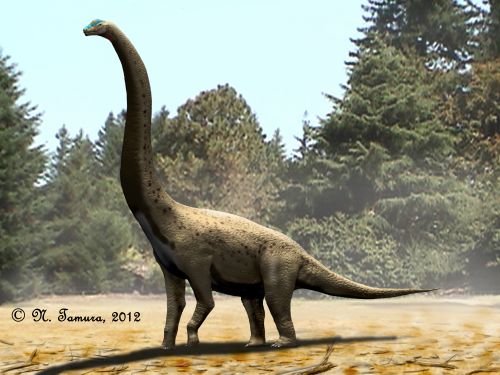
Fig 1.- Rebbachisaurids were present on the Isle of Wight during the Early Cretaceous.
Sauropods from the Early Cretaceous (part II)
The Wessex Formation of the Isle of Wight
The Wessex formation on the Isle of Wight of Barremian age (~ 127 MYA) has a number of sauropod remains, all very fragmentary but enough to point to a high degree of diversity for this group in the British Isles during the Early Cretaceous.
The presence of Diplodocids is scarce if ever they were present at all. A chevron has been described by Alan Charig (1980) as belonging to a diplodocid, but the identification has since then been disputed. The presence of Rebbachisaurids, on the other hand, is well attested and is represented by isolated bones, including a characteristic scapula [= shoulder blade] (MIWG 6544), tail vertebra (MIWG 5384) and possibly teeth. From these scant remains, it appears that the unnamed British representative of this group is most closely related to the Spanish Demandasaurus and the African Nigersaurus (see my previous post about it).
Brachiosaurids were also certainly there and remains are represented by ‘Pleurocoelus’ valdensis Lydekker, 1889, based on teeth, dorsal and caudal vertebra found near Cuckfield, East Sussex, Hastings beds and on the Isle of Wight. Usually considered to be dubious, Pleurocoelus valdensis is, according to Ruiz-Omeñaca & Canudo (2005), a perfectly valid taxon that was also present in the Iberian Peninsula. Other possible brachiosaurid remains include ‘Ornithopsis’ eucamerotus Hulke, 1882, based on a set of pelvis bones (BMNH R97), an unnamed taxon evidenced by a single large cervical vertebra (MIWG 7306) that might have belonged to the largest dinosaur of Europe (Naish et al., 2004), and Eucamerotus foxi Blows, 1995, described from a neural arch (BMNH R2522), two dorsals (BMNH R89-90) and another dorsal from a juvenile specimen (BMNH R2524). Oplosaurus armatus Gervais, 1852, is based on a large tooth (BMNH R964) that may belong to a brachiosaurid, but more recent analysis indicated it is more probably from a camarasaurid (Canudo et al., 2002). Chondrosteosaurus gigas Owen, 1876 is known from two neck vertebrae (BMNH 46869 & BMNH 46870) and is probably a basal titanosauriform, although we cannot say if it is a camarasaurid or a brachiosaurid.
The Wessex Formation of the Isle of Wight
The Wessex formation on the Isle of Wight of Barremian age (~ 127 MYA) has a number of sauropod remains, all very fragmentary but enough to point to a high degree of diversity for this group in the British Isles during the Early Cretaceous.
The presence of Diplodocids is scarce if ever they were present at all. A chevron has been described by Alan Charig (1980) as belonging to a diplodocid, but the identification has since then been disputed. The presence of Rebbachisaurids, on the other hand, is well attested and is represented by isolated bones, including a characteristic scapula [= shoulder blade] (MIWG 6544), tail vertebra (MIWG 5384) and possibly teeth. From these scant remains, it appears that the unnamed British representative of this group is most closely related to the Spanish Demandasaurus and the African Nigersaurus (see my previous post about it).
Brachiosaurids were also certainly there and remains are represented by ‘Pleurocoelus’ valdensis Lydekker, 1889, based on teeth, dorsal and caudal vertebra found near Cuckfield, East Sussex, Hastings beds and on the Isle of Wight. Usually considered to be dubious, Pleurocoelus valdensis is, according to Ruiz-Omeñaca & Canudo (2005), a perfectly valid taxon that was also present in the Iberian Peninsula. Other possible brachiosaurid remains include ‘Ornithopsis’ eucamerotus Hulke, 1882, based on a set of pelvis bones (BMNH R97), an unnamed taxon evidenced by a single large cervical vertebra (MIWG 7306) that might have belonged to the largest dinosaur of Europe (Naish et al., 2004), and Eucamerotus foxi Blows, 1995, described from a neural arch (BMNH R2522), two dorsals (BMNH R89-90) and another dorsal from a juvenile specimen (BMNH R2524). Oplosaurus armatus Gervais, 1852, is based on a large tooth (BMNH R964) that may belong to a brachiosaurid, but more recent analysis indicated it is more probably from a camarasaurid (Canudo et al., 2002). Chondrosteosaurus gigas Owen, 1876 is known from two neck vertebrae (BMNH 46869 & BMNH 46870) and is probably a basal titanosauriform, although we cannot say if it is a camarasaurid or a brachiosaurid.

Fig 2.- The specialized Titanosaurs were the dominant group of sauropods at the end of the Early Cretaceous.
The most evolved group of sauropods, the titanosaurs, is represented by Iuticosaurus valdensis LeLoeuff et al., 1993, known from 2 tail vertebrae (BMNH R146a & BMNH 151).
Finally, two dubious taxa are indeterminate sauropods: the Isle of Wight ‘Ornithopsis’ hulkei dorsal vertebra (BMNH R28632) was renamed Bothriospondylus elongatus by Owen in 1875 and ‘Ornithopsis’ eucamerotus by Hulke in 1882. Chondrosteosaurus magnus Owen, 1876 is based on a single partial vertebra (BMNH R98).
The Lower and Upper Greensand
The Lower Greensand Group of Aptian age (~120 MYA) delivered a pelvis and associated sacrum (BMNH R12713) from Luccombe Chine, Isle of Wight of a titanosauriform of some sort (Stroh, 1949, Blows, 1995). Also from the Lower Greensand came Dinodocus mackesoni Owen, 1884, based on a humerus (BMNH 14695) from Hythe, Kent. Possibly another indeterminate titanosauriform.
The Upper Greensand formation (Albian-Cenomanian age, ~112 MYA) in southeastern England bears a few sauropod remains, which are the youngest in the British Isles and all belong to titanosaurs. “Titanosaurus” lydekkeri Huene, 1929 (= Iuticosaurus lydekkeri), based on a vertebra (BMNH 32390) found on the Isle of Wight, was synonymized with Macrurosaurus semnus by McIntosh, 1990, but generally considered a nomen dubium. Macrurosaurus semnus Seeley, 1876 is based on a set of 25 caudal vertebrae (SM B55630) and 15 more various bits found in Cambridgeshire and of Cenomanian age, and is an indeterminate titanosaur.
This concludes our tour of the sauropods of the British Isles.
Original artworks on Paleoexhibit are copyrighted to Nobu Tamura. Do not use without permission (Email: nobu dot tamura at yahoo dot com)
References:
W. T. Blows. 1995. The Early Cretaceous brachiosaurid dinosaurs Ornithopsis and Eucamerotus from the Isle of Wight, England. Palaeontology 38(1):187-197
W. T. Blows. 1998. A review of Lower and Middle Cretaceous dinosaurs of England. In S. G. Lucas, J. I. Kirkland, and J. W. Estep (eds.), Lower and Middle Cretaceous Terrestrial Ecosystems, New Mexico Museum of Natural History and Science Bulletin 14:29-38
J. Le Loeuff, E. Buffetaut, M. Martin, V. Martin, and H. Tong. 1993. Découverte d'Hadrosauridae (Dinosauria, Ornithischia) dans le Maastrichtian des Corbières (Aude, France) [Discovery of Hadrosauridae (Dinosauria, Ornithischia) in the Maastrichtian of Corbières (Aude, France)]. Comptes Rendus de l'Academie des Sciences, Paris, Série II 316:1023-1029
R. Lydekker. 1889. Note on some points in the nomenclature of fossil reptiles and amphibians, with preliminary notices of two new species. Geological Magazine, decade 3 6:325-326
R. Lydekker. 1893. On a sauropodous dinosaurian vertebra from the Wealden of Hastings. Quarterly Journal of the Geological Society of London 49:276-280
J. S. McIntosh. 1990. Sauropoda. In D. B. Weishampel, H. Osmólska, and P. Dodson (eds.), The Dinosauria. University of California Press, Berkeley 345-401
A. G. Melville. 1849. Notes on the vertebral column of the Iguanodon. Philosophical Transactions of the Royal Society of London 139:285-300.
D. Naish, D.M. Martill, D. Cooper & K.A. Stevens, 2004. Europe’s largest dinosaur? A giant brachiosaurid cervical vertebra from the Wessex Formation (Early Cretaceous) of southern England. Cretaceous Research, 25, 787–795.
D. Naish and D. M. Martill. 2007. Dinosaurs of Great Britain and the role of the Geological Society of London in their discovery: basal Dinosauria and Saurischia. Journal of the Geological Society, London 164:493-510
R. Owen. 1876. Monograph on the fossil Reptilia of the Wealden and Purbeck formations. Supplement no. VII. Crocodilia (Poikilopleuron) and Dinosauria? (Chondrosteosaurus). [Wealden.]. The Palaeontographical Society, London 1876:1-7
J. I. Ruiz-Omeñaca and J. I. Canudo. 2005. "Pleurocoelus" valdensis Lydekker 1889 (Saurischia, Sauropoda) en el Cretácico Inferior (Barremiense) de la Península Ibérica ["Pleurocoelus" valdensis Lydekker 1889 (Saurischia, Sauropoda) in the Lower Cretaceous (Barremian) of the Iberian Peninsula]. Geogaceta 38:43-45
H. G. Seeley. 1870. On Ornithopsis, a gigantic animal of the pterodactyle kind from the Wealden. Annals and Magazine of Natural History, series 4 5:279-283.
H. G. Seeley. 1876. On Macrurosaurus semnus (Seeley), a long tailed animal with procoelous vertebrae from the Cambridge Upper Greensand, preserved in the Woodwardian Museum of the University of Cambridge. Quarterly Journal of the Geological Society of London 32:440-444
M. P. Taylor and D. Naish. 2007. An unusual new neosauropod dinosaur from the Lower Cretaceous Hastings Beds Group of East Sussex, England. Palaeontology 50(6):1547-1564.